


Even though we take a vacation to relax, it can be stressful because of the problems that appear during the weeks leading up to departure. Those days are filled with insecurity about forgetting documents or leaving reservations for the last minute. Sometimes, that makes it impossible for people to enjoy the destination unless they follow a well-organized travel checklist.
Today, Tripiefly will highlight how the month before a trip is when the most important planning decisions take place. Travel documents, transportation arrangements, accommodation details, digital preparation, insurance considerations, and packing plans all require attention before departure day arrives. An organized approach ensures that small oversights don’t turn into larger problems once the journey begins.
Why is 30 days before your trip the most important window?
Everyone who has an organized schedule for traveling knows that the month before departure is when most travel plans move from ideas to confirmed reservations.
This time frame is when decisions are made, and they can all affect everything from the total cost of the trip to how smoothly the travel experience unfolds once the journey begins.
That covers airfare, hotel availability, travel insurance, transportation arrangements, and activity reservations.
That happens because these costs are easier to manage when there is still enough time to compare options with attention.
The 30-day mark is also an ideal time to review passports, visas, vaccination records, and destination entry rules that should be checked early enough to resolve any problems.
Also, downloading travel apps, saving reservation confirmations, organizing emergency contacts, and backing up important documents can prevent unnecessary stress later.
Those reasons answer why a travel checklist is useful during this period. In short, it transforms a long list of responsibilities into manageable tasks.
What mistakes travelers make in the last week that cost the most money?
One of the most common mistakes is postponing reservations that could have been completed earlier.
Flights, accommodations, airport transportation, and popular attractions frequently get more expensive as departure dates approach.
Document issues create another problem, like discovering an expired passport or missing visa requirement can lead to unexpected expenses and unnecessary stress.
Alongside, last-minute purchases of luggage, travel accessories, medication, chargers, or weather-appropriate clothing are also more expensive than buying those items in advance.
The majority of expensive travel mistakes are caused because simple tasks that required only a few minutes were postponed until there was no time left to address them properly.
Which tasks must be done early and which can wait until closer
Well, of course not every travel task deserves the same level of urgency.
Some decisions are more expensive or difficult when delayed, while others can safely wait until the final days before departure.
The most important is getting travel documents prepared as early as possible. Passports, visas, travel insurance, and entry rules can take time to resolve if something is incorrect.
Major reservations also belong near the top of the priority list since flights and accommodations have better prices when booked several weeks before the trip.
Another task that may take time is notifying banks about international travel, reviewing foreign transaction fees, exchanging currency, or confirming payment methods before departure.
Then, aside from purchasing any specialized items that may be required for the destination, most clothing and luggage preparation can be handled during the final week.
In the end, a good travel checklist organizes urgent responsibilities from tasks that can wait, making the entire planning process more organized and preventing last-minute stress.
Step-by-step: 30-day travel checklist
The final month before departure is the ideal time to organize every major part of a trip.
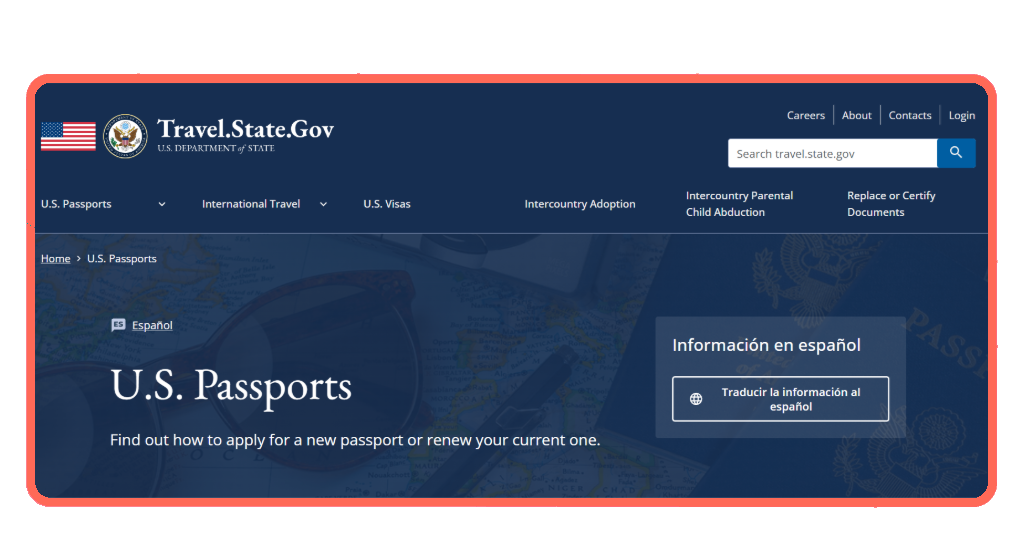
You can use the U.S. Department of State’s International Travel portal to review destination requirements, travel advisories, passport information, and other important updates.
Step 1: review travel documents
Visit the International Travel section of the U.S. Department of State and verify passport validity, visa requirements, entry regulations, and any destination-specific travel information.
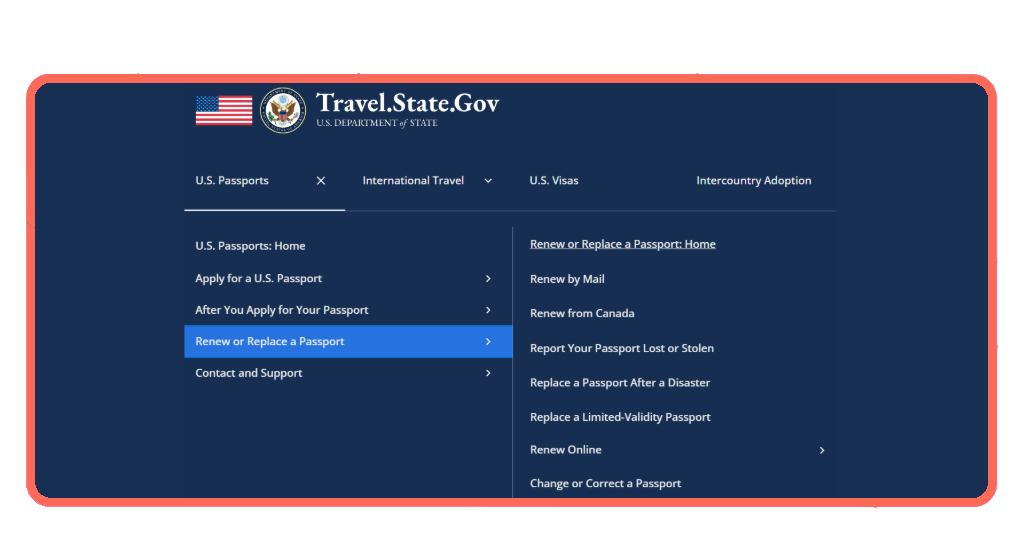
Step 2: renew passport
If needed, you can start the process of renewing your passport.
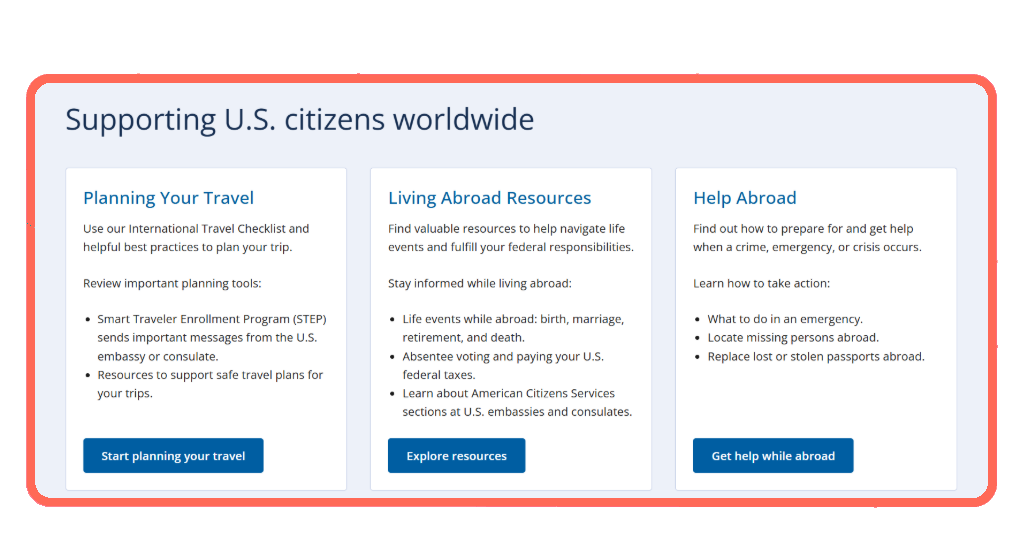
Step 3: plan your travel
Then, on the International Travel page, you can plan your travel and use the platform’s travel checklist.
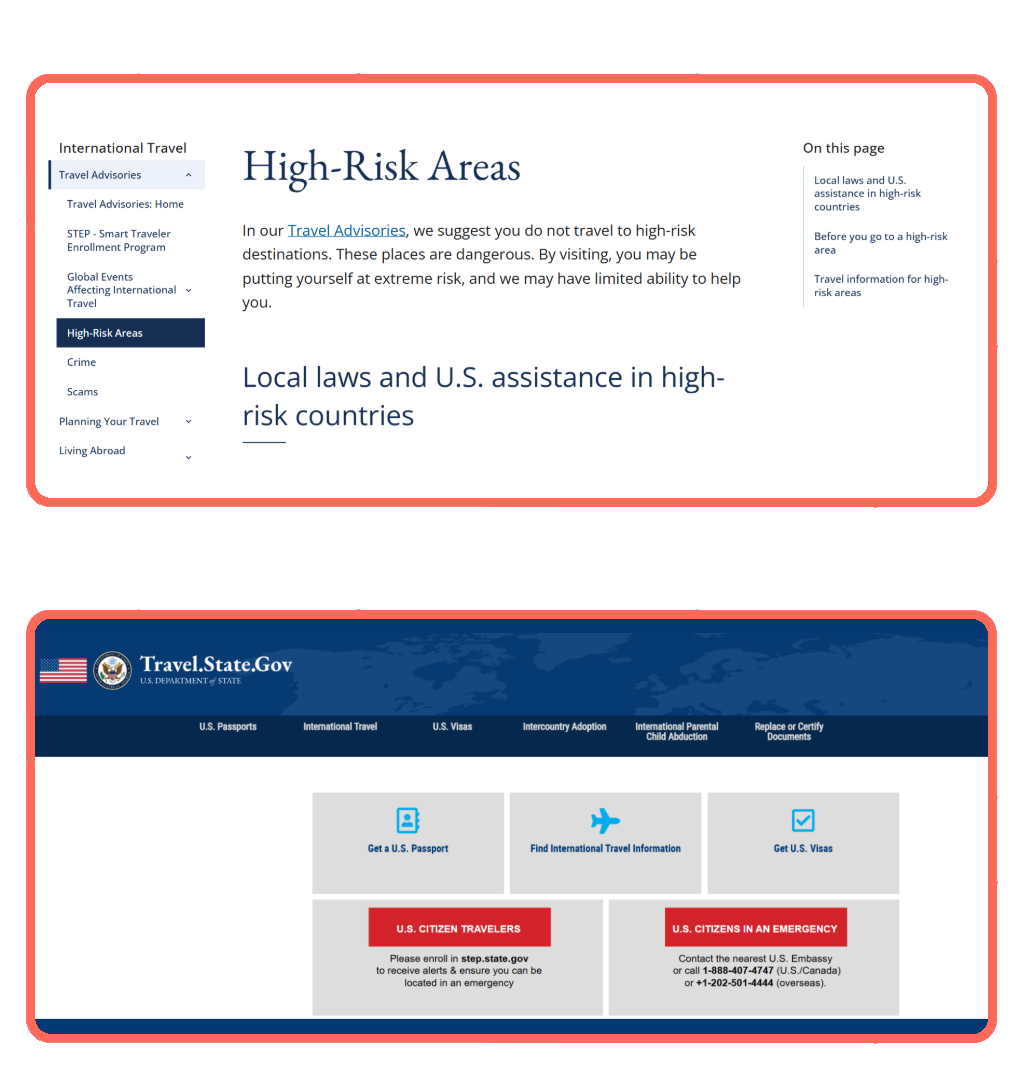
Step 4: high-risk areas
With the website, you can access the High-Risk Areas page to get informed about some destinations.
Digital prep: apps, downloads and backups before you leave
Smartphones are also part of travel preparation since they now store boarding passes, hotel confirmations, maps, payment methods, and emergency information.
The U.S. Department of State’s International Travel website should be one of the first resources saved for your travel checklist.
Travelers can use it to review destination information, travel advisories, passport guidance, and other official updates that may become relevant before or during the trip.
Also, downloading essential apps before leaving can prevent unnecessary problems later.
Airline apps, hotel apps, transportation services, translation tools, weather apps, and offline mapping platforms are easier to install and configure before arriving at the destination.
Then copies of passports, visas, identification cards, travel insurance policies, and reservation confirmations can be stored securely for easier access if needed.
Since internet access may not always be available, downloading maps, tickets, itineraries, and reservations ahead of time can be extremely useful when mobile service is unavailable.
Commonly, digital preparation is overlooked because it requires only a small amount of time.
Still, a few minutes spent organizing apps and backups help travelers avoid stress and access important information much more quickly during their trip.
What to bring and what to leave home for any destination?
Packing efficiently is one of the best ways to reduce travel stress because many trips become more complicated with unnecessary luggage.
The first items to organize are passports, identification cards, visas, travel insurance information, payment methods, and reservation confirmations.
Also, they all deserve a dedicated place in your carry-on bag where they remain easy to access throughout the journey.
Then, clothing should be selected according to weather forecasts and planned activities.
That’s important because most travelers pack way more clothing than they actually use, increasing baggage weight and making transportation less convenient.
After that, chargers, power banks, adapters, headphones, and any devices needed during the trip should be packed and tested before departure.
In the end, having a travel checklist helps to distinguish between genuine necessities and items packed out of uncertainty.
The goal is not to travel with as little as possible but to carry what is useful while avoiding unnecessary weight, clutter, and baggage-related expenses.
A travel checklist makes every trip easier
A trip is more enjoyable when decisions are made at the right time. Documents, packing, and reservations may seem like details, but they have a major impact on the overall experience.
A well-structured travel checklist helps you stay organized; that’s why checking the Travel State website can provide valuable information about the destination requirements.
Taking a few minutes to follow a travel checklist during the 30 days before departure can create a less stressful experience from start to finish.
Remember that better preparation allows everyone to spend less time solving problems and more time enjoying the destination.
Related: Hotel rewards programs: how free nights really work
If you think this article was useful for your travels, save Tripiefly on your favorites and stay up-to-date with other travel tips.