


Late-night airports have a certain energy to them. The terminals are quieter, the lines are shorter, and somewhere on the departures board, there’s a flight leaving at midnight for less than the 8 AM option costs. That price difference isn’t luck or a glitch in the system. Red-eye flight deals follow patterns, and once you know those patterns, booking a cheaper overnight flight stops feeling like a gamble and starts feeling like a strategy.
That knowledge alone can shift the way you approach every flight search from here on out. This Tripiefly guide covers where those deals live, how to use Google Flights, Kayak, Skyscanner, and other tools to find them, and which booking habits keep your airfare consistently low. Keep reading, and you’ll have everything you need to stop paying more than you need to for flights.
Where to find cheaper red-eye flight deals?
Google Flights is where this search starts, and the platform gives you enough control over departure times, dates, and routes to make fare hunting feel nothing like a standard search.
The time filters, price calendar, and ‘Explore’ map each do a specific job, and pairing them correctly is what brings the kind of red-eye flight deals that a quick search will never show you.
Cheaper overnight fares don’t hide; they just require you to look in the right places inside the platform, and Google Flights puts all of those places within reach.
Google Flights ‘Explore’ map for overnight routes
The ‘Explore’ map opens up a world of departure options from a single screen, letting you scan fare estimates across multiple cities without committing to a destination upfront.
That visual overview changes the way you search because you’re no longer guessing which route is cheaper; the map lays the pricing out for you across an entire continent.
The price calendar hiding the cheapest nights
Most travelers pick a date and search around it, but Google Flights’ price calendar flips that habit by showing you where the cheapest nights already are before you’ve chosen anything.
Midweek nights often show lower fares on that calendar, and a single night of flexibility can make a real difference on domestic routes.
Filters inside Google Flights that cut out daytime flights
The departure time slider strips out every morning and afternoon option the moment you drag it past 9 PM, leaving only the overnight inventory that carries the lowest price tags on most routes.
Stacking that filter with cabin class and number of stops preferences is where the best red-eye flight deals come in, turning a messy results page into something you can book with confidence.
Best routes in the US to find cheaper night flights
Some US routes are just built for overnight travel, and a big part of that comes down to how many business travelers fill those planes during the day and clear out by evening.
Once those daytime seats fill up and the suits head home, overnight inventory opens up, and fares drop, and that’s the window you want to be searching in for red-eye flight deals.
The corridors and airports that follow that pattern most consistently are also the ones where you’ll find the biggest price swings between a 7 AM departure and a midnight one.
Coast-to-coast flights with low overnight fares
The transcontinental runs between New York and Los Angeles or San Francisco, especially the overnight flights heading east, are the classic red-eye routes in the domestic market.
Late departures on those routes are sometimes cheaper than the morning equivalent, and flying overnight means you don’t spend a full day of your trip in the air.
Short-haul routes that reward night travelers
Short-haul corridors such as Chicago to Nashville or Dallas to Atlanta often have late-evening and very early departures, and those less popular times are sometimes priced lower.
On the right date and carrier, a midweek evening ticket on either of those runs can cost noticeably less than a morning flight, so it is worth comparing both.
Busiest airports with the most red-eye options
LAX, JFK, and ATL keep overnight departures running well past midnight, and with that many carriers competing for the same late-night passengers, red-eye flight deals show up frequently.
More overnight options in one place means more chances to find a fare that’s priced way below what you’d pay on a less competitive route out of a smaller airport.
Step-by-step guide to booking discounted flights online
Booking a cheaper overnight flight isn’t complicated, but most people skip a few key moves that make a real difference in what they end up paying at checkout.
Google Flights has the tools to do most of the heavy lifting, and the order in which you use them changes how useful your results actually turn out to be.
Getting this sequence right can make a real difference in what you pay on the same route, and that’s exactly the kind of gap these red-eye flight deals are built around.
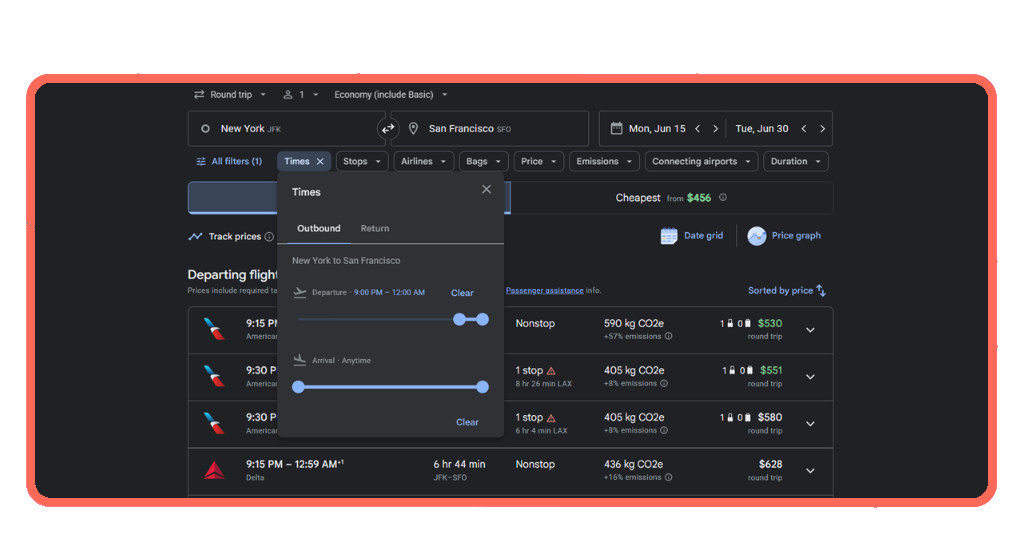
Step 1: set your departure time to after 9 PM
Open Google Flights, plug in your origin, destination, and travel dates like you normally would, then drag the departure time slider past 9 PM before you look at a single result.
That overnight window is where carriers price seats to fill planes that’d otherwise fly half-empty, so you’re already looking at a completely different tier of fares from the start.
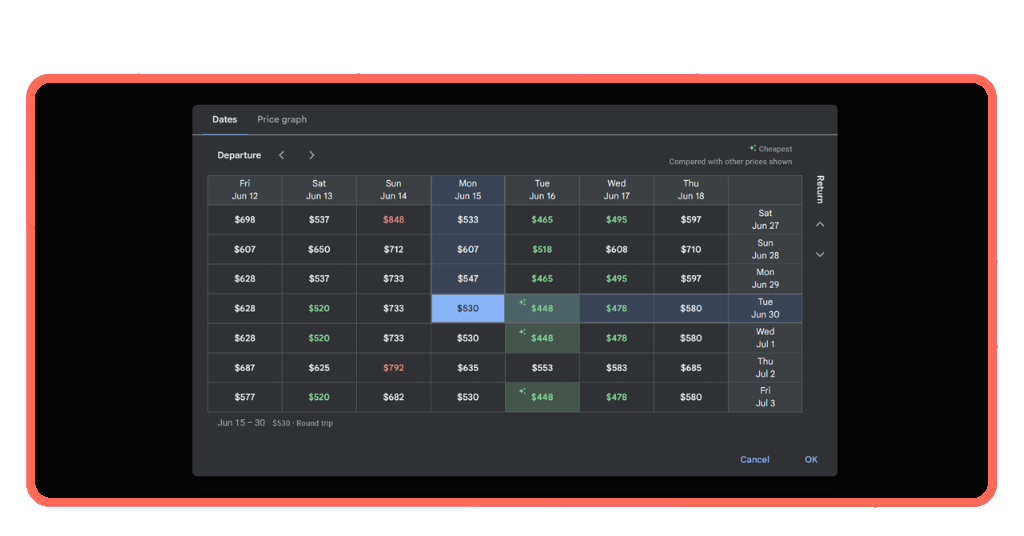
Step 2: select ‘Date grid’ on Google Flights
Once your time filter is set, click on the ‘Date grid’ feature and let Google Flights show you a spread of nearby departure days alongside your original choice.
A Wednesday departure might come in cheaper than the Friday you had in mind: Google’s analysis of U.S. fares found that Monday-to-Wednesday departures averaged about 12% less than weekend departures. That kind of swing adds up over time.
Step 3: sort results by price, not convenience
Sorting by ‘Cheapest’ instead of ‘Best’ is where red-eye flight deals tend to show up, because the default sort buries cheaper options behind ones the algorithm considers more convenient.
Scrolling past the top results and checking what sits further down the list regularly turns up fares with one extra stop that still get you there for a fraction of the price.
How Google Flights, Kayak, and Skyscanner price alerts work
Google Flights, KAYAK, and Skyscanner all track fare movements on routes you’re watching, and they’ll ping you the moment a price drops low enough to make a real difference.
Each platform handles alerts slightly differently, and knowing those differences means you’re not just sitting around refreshing a search page every other day waiting for something to change.
Setting alerts across all three platforms at once puts you in a position where the best red-eye flight deals come to you rather than you having to hunt them down manually every time.
How flexible dates can unlock cheaper airfares
Google Flights and Skyscanner both have flexible date tools that show you a full grid of prices across departure and return dates, and the cheapest combinations jump out immediately.
Shifting your trip by even two days in either direction on that grid can drop your total fare by a significant margin, especially on routes where weekend demand keeps prices elevated.
Turning on alerts for specific overnight time slots
KAYAK lets you filter price alerts by departure time, which means you can set it to notify you only when overnight fares on a specific route drop below a price you’ve decided on.
Skyscanner works similarly, and running both simultaneously on the same route gives you a wider net to catch fare drops that either platform might surface at different times.
Reading the price graph to spot fare drops
Google Flights‘ price graph stretches across a full year on some routes, and the dips on that graph tend to follow the same seasonal and weekly patterns every time you check it.
Booking during one of those visible dips rather than at a random point in the calendar is one of the more reliable ways to land red-eye flight deals at a price that feels almost too good.
How to avoid baggage fees and seat fees
A cheap overnight fare can start looking a lot less impressive once the airline stacks baggage fees and seat selection charges on top of the base price you thought you were paying.
Those add-ons are where carriers make back a big chunk of what they discounted on the ticket, and they’re easy to miss if you’re moving through the booking flow too quickly.
Knowing which airlines bundle those costs into the fare and which ones don’t is what keeps solid red-eye flight deals from turning into a more expensive ticket than you planned for.
Airlines that include a free carry-on overnight
Southwest ended free checked bags for most travelers in May 2025. Free bags now depend on the fare type, A-List status or holding a Southwest credit card, so add bag fees before you compare its fares with other airlines.
Most traditional U.S. airlines still include a full-size carry-on on most fares, while ultra-low-cost carriers such as Frontier charge for one on their basic fares. On an overnight trip where you’re traveling light, that difference alone can change which fare is really the cheapest.
Seat selection tricks for red-eye passengers
Skipping seat selection at booking and waiting until check-in opens up is a move that works particularly well on overnight flights, since some carriers release more seats at no charge in that window.
On a red-eye, a seat that costs extra at booking can sometimes become available at no charge when check-in opens, especially on routes that aren’t running at full capacity.
Bundled fare types that cover bags and seats
Basic economy fares look cheap upfront, but once you add a carry-on and a seat assignment, the total can easily climb past what a standard fare with both included would’ve cost you.
Checking the bundled fare option before finalizing any red-eye flight deals takes about 30 seconds and can save you from paying separately for things that were available as a package.
Sleep on the plane and save money on the trip
Late-night flights have a reputation for being uncomfortable, but the savings they carry more than make up for a few hours of airport quiet and a shorter sleep window.
In this Tripiefly guide, we showed what it takes to find red-eye flight deals that actually hold up once you add bags, seats, and fees into the total cost of your trip.
Keep browsing Tripiefly for more articles on finding cheaper flights, because there’s always another angle worth knowing about before you hit that ‘book’ button.