


Standing in front of an open suitcase trying to play mental geometry with your clothes is stressful enough. But now, the puzzle starts before you even unzip your bags: calculating the unpredictable airport math of baggage fees. The debate of traveling with a checked bag and carry-on setup has turned into a strategic financial game where one wrong selection can easily slap an extra $65 onto a flight that originally looked like an absolute bargain.
Airlines have unbundled their ticket pricing models over the last decade, turning what used to be an operational courtesy into a lucrative revenue stream. If you want to stop overpaying for your space in the sky, you have to look past the initial ticket sticker price and break down exactly how your packing choices shift your total travel expenses. Before you print your next boarding pass, check this and more tips on Tripiefly.
Checked baggage and carry-on: how do airlines price them?
The difference in pricing between a checked bag and carry-on often comes down to how each type of luggage is handled during your trip.
Carry-on bags stay with you in the cabin, while checked luggage must be processed, transported, loaded onto the aircraft, and returned to passengers after landing.
Because checked bags require additional handling and airport resources, airlines typically charge more for them than carry-on luggage.
To make things clearer, the U.S. Department of Transportation introduced the DOT Ancillary Fee Final Rule, pushing for transparent upfront fee disclosures at the initial point of sale, so passengers aren’t blindsided by added costs at the check-in desk.
However, despite transparency efforts, pricing models remain highly aggressive. Ultra-low-cost carriers (ULCCs) routinely turn the traditional model completely upside down.
On budget lines, overhead cabin space is priced higher than a spot in the cargo hold.
Why? Because boarding a plane full of oversized roller bags slows down the turn-around time at the gate, which costs the airline massive amounts of money in operational delays.

Carry-on baggage and checked baggage: size limits and fees by airline
Airline baggage policies are constantly changing, so it is worth checking the latest size limits and fees before your trip. Looking at current guidelines can make it easier to compare a checked bag and carry-on and avoid surprise costs.
| Airline Type | Carrier | Carry-On Baggage Rules | 1st Checked Bag Fee (Prepaid) | Gate Surcharge Penalty |
| Legacy | Delta Air Lines | Free standard carry-on + personal item included. | $35 each way | None for standard sizes. |
| Legacy | United Airlines | No overhead carry-on is allowed on Basic Economy. | $35 each way | $65 to check a bag at the gate. |
| Legacy | American Airlines | Free carry-on included across all fare tiers. | $35 to $45 (Varies by route) | Standard bag fee applies. |
| Budget / ULCC | Frontier Airlines | Personal item only. Overhead carry-on starts at $40. | Starts at $35 online | Up to $99 if paid at the gate. |
| Budget / ULCC | Spirit Airlines | Personal item only. Overhead carry-on starts at $35. | Starts at $35 online | Up to $100 if paid at the gate. |
Warning
If you purchase a Basic Economy ticket on United Airlines, your ticket excludes a full-sized overhead carry-on. If you arrive at the gate with a roller bag anyway, you will be forced to pay the standard checked bag fee plus a $30 gate processing penalty, vaporizing whatever savings your cheap ticket originally offered.
How to decide between checked and carry-on baggage
Well, if you are booking standard economy on a legacy carrier, your overhead carry-on is entirely free, making it the superior choice over paying a $35 checked bag fee each way.
If you are flying a budget carrier, checking a bag online during booking is often $5 to $15 cheaper than paying for a cabin roller.
But here are some layover risk factors: if your flight path involves tight connections under 45 minutes, keeping your luggage in hand eliminates the risk of the airline misrouting your belongings in transit.
For trips stretching past 7 days, or those requiring heavy gear, bulky winter coats, or liquids exceeding the TSA 3-1-1 limit, absorbing the cost of a single checked bag is far more practical than trying to cram your life into a tiny overhead shell.
How to fit everything in carry-on luggage and avoid fees
Trying to travel with only a checked bag and carry-on allowance?
A little planning can help you pack more efficiently and avoid extra charges. Packing cubes are a great place to start, helping you stay organized while making better use of the available space.
Rolling your clothes instead of folding them can also help maximize room inside your suitcase. Many travelers find that it keeps clothing more compact and easier to organize throughout the trip.
Keep toiletries and liquids together in a clear pouch near the top of your bag so they are easy to access during security screening. It is a small step that can save time and frustration at the airport.
And if you are bringing bulky items like boots, coats, or heavy sweaters, consider wearing them while you travel. Doing so can free up space in your luggage and help keep your bags within airline limits.
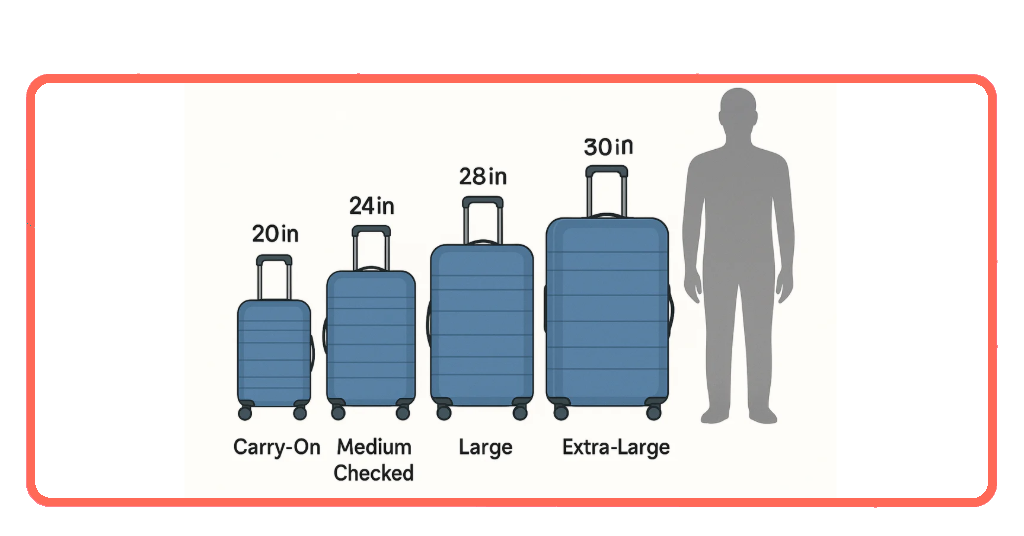
When paying for checked baggage is the smartest choice
While many travelers prefer to pack light and avoid checked baggage fees, there are plenty of situations where checking a bag is the more practical choice.
Families traveling with young children, passengers with mobility limitations, and business travelers carrying additional equipment or materials may find that checking luggage makes the journey more comfortable and convenient.
It’s also worth remembering that baggage fees are not always unavoidable.
Some travel rewards credit cards include benefits such as free checked bags for the cardholder and, in some cases, additional travelers on the same reservation.
Depending on your airline and card benefits, these perks can help reduce the overall cost of flying with a checked bag and carry-on.
Some card benefits protect your upfront cash flow while traveling—if you manage your travel points strategically, you can even explore options for turning credit card rewards into real cash.
How to avoid unnecessary baggage fees
Choosing between a checked bag and carry-on depends on your airline, fare type, travel plans, and packing needs.
While some airlines include certain baggage allowances in the ticket price, others charge separately for carry-on bags, checked luggage, or both.
Reviewing the rules before your trip can help you avoid unexpected costs and make the option that best fits your travel style.
One of the easiest ways to save money is to check baggage fees before arriving at the airport and pay for any necessary luggage in advance when possible.
Taking a few minutes to review baggage policies, size limits, and fare restrictions can help you travel with greater confidence and avoid last-minute surprises at check-in.