


Few places in the United States offer the same combination of wildlife, geothermal wonders, mountain scenery, and outdoor adventure as Yellowstone National Park. Yet many travelers begin planning with one major concern: cost. Stories about expensive lodges and peak-season prices can make the destination look less accessible. But what if Tripiefly tells you it is possible to plan a trip to Yellowstone on a budget?
Well, this is true. Traveling to Yellowstone is entirely achievable with the right planning strategy. Below you will discover that while accommodations inside the park can be expensive during busy periods, many of Yellowstone’s most famous attractions cost nothing beyond park admission. That’s why it’s important to know about fees, how to choose affordable lodging, what’s really worth visiting, and which one is the right season to reduce expenses.
Yellowstone on a budget: what do you pay at the gate?
Would you be surprised if we show that the Yellowstone entrance fee is one of the smaller expenses of the trip?
That is true. The biggest expenses are usually lodging, transportation, and food. They combined have a greater impact on the final budget than admission itself.
It happens because the park charges admission based on how visitors enter, with separate rates for private vehicles, motorcycles, and individuals arriving on foot or by bicycle.
So a standard vehicle pass covers all passengers traveling in the same car and remains valid for multiple days.
Then, once inside the park, most of the major attractions can be enjoyed without additional fees.
Famous sites like Old Faithful, Grand Prismatic Spring, scenic overlooks, wildlife viewing areas, and hiking trails are included with park admission.
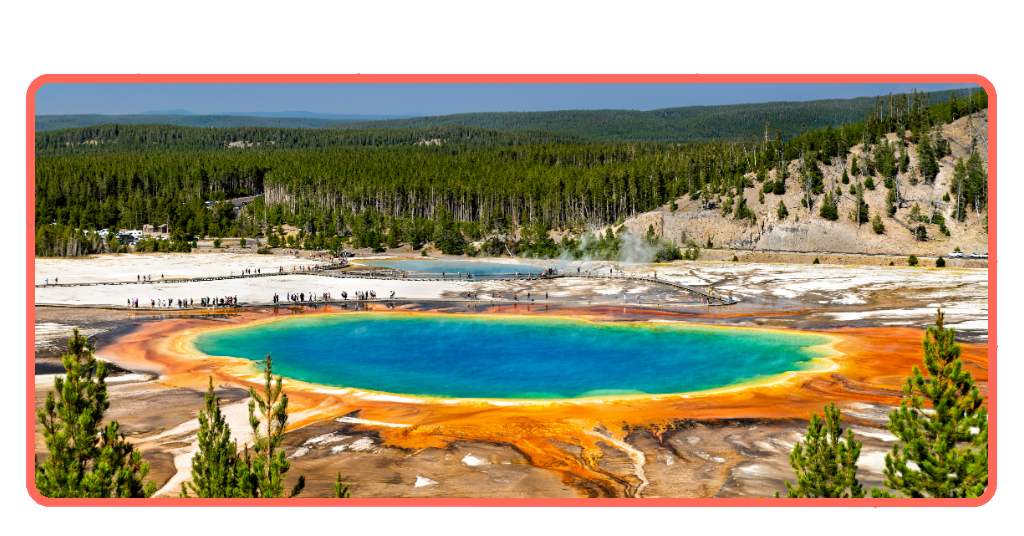
Entrance fee, camping and lodging
If you wanna save money on your Yellowstone on a budget trip, camping is the most affordable overnight option available to visitors.
Mostly, campgrounds cost substantially less than hotels and place travelers closer to many of Yellowstone’s most popular attractions.
Of course lodging inside the park provides unmatched convenience. However, nightly rates would probably increase highly, even more during the busiest travel months.
On the other hand, visitors who stay in nearby gateway communities find more affordable accommodations while remaining within reasonable driving distance of the park entrances.
Step-by-step guide to planning a Yellowstone trip on a budget
Every trip can be more affordable when major expenses are estimated before reservations are made.
So take time to compare lodging, transportation, travel dates, and other costs to plan your trip to Yellowstone on a budget.
Here’s a guide that will help you with that:
Step 1: check official park fees
Begin by visiting Yellowstone Entrance Fees to review current admission costs, pass options, and important visitor information before building your budget.
Step 2: choose your travel dates carefully
Then, compare several travel periods and consider spring or fall visits, when lodging rates are lower and crowds are smaller than during peak summer months.
Step 3: compare lodging inside and outside the park
Also, review accommodations in nearby communities as well as park lodges so you can determine if the convenience of staying inside Yellowstone justifies the additional cost.
Step 4: estimate transportation expenses
Don’t forget to calculate fuel, rental car costs, flights, parking, and daily driving distances so transportation does not become an unexpected budget problem later.
Step 5: plan your sightseeing route
Organize major attractions into logical driving loops to reduce unnecessary mileage and maximize the time spent exploring the park instead of driving between locations.
Step 6: finalize your budget before booking
Finally, add together admission fees, accommodations, transportation, food, and incidental expenses so you have a realistic picture of the total trip cost before making reservations.
Where to stay near Yellowstone without paying park lodge prices
It’s obvious that accommodation inside Yellowstone offers unmatched proximity to the park’s attractions.
But sometimes, that convenience comes with premium pricing and limited availability during peak travel periods.
Because of that, those who plan to go to Yellowstone on a budget try to reduce costs by staying in nearby gateway communities instead.
West Yellowstone, for example, is one of the most popular alternatives because it sits just outside the park’s western entrance.
The town offers a wide range of hotels, motels, restaurants, and vacation rentals that often cost less than accommodations located inside Yellowstone.
Alongside, travelers entering through the northern section of the park frequently choose Gardiner.
This town provides convenient access to wildlife viewing areas and major attractions while maintaining a broader selection of lodging options.
Additionally, there’s Cody. The town appeals to visitors who want a more traditional Western atmosphere combined with additional hotel inventory.
Although it requires a longer drive to reach some park areas, room rates can occasionally offset the extra travel time.
Smaller communities around the park provide additional savings as well.
These communities aim for travelers willing to trade proximity for lower nightly costs and greater accommodation availability.
Overall, West Yellowstone offers the strongest balance between affordability and convenience.
While Gardiner and Cody remain excellent alternatives depending on the planned route and preferred entrance to the park.
Best time to visit Yellowstone for lower costs
The timing of a trip to Yellowstone on a budget can have a significant impact on the overall expenses.
That impacts accommodation prices, flight costs, rental car availability, and visitor demand since it all fluctuates throughout the year.
Summer is the busiest season in Yellowstone, from June through August.
Warm weather and school vacations push hotel rates higher while reducing lodging availability both inside and outside the park.
That’s why travelers looking for better value frequently target the shoulder seasons during May, early June, September, and early October.
These months provide a strong combination of lower accommodation costs, lighter crowds, nice weather, and excellent opportunities for wildlife viewing throughout the park.
Still, Spring visits can be attractive for budget-conscious travelers. Lodging rates are usually lower than during peak months, and many animals are more active as the weather improves.
Autumn also offers notable advantages with cooler temperatures, beautiful scenery, and declining visitor numbers.
This ends up creating a more relaxed experience while helping travelers secure better prices on accommodations and transportation.
Winter remains the least expensive season, although access to certain roads and attractions becomes more limited due to weather conditions.
Yellowstone rewards preparation more than spending
If you assume Yellowstone requires a large budget, you just saw that reality is quite different. Once inside the park, some memorable experiences are available without attraction fees.
While accommodation and transportation are the most expensive part, you can decrease this impact by staying in nearby communities and choosing travel dates wisely.
If you’re planning Yellowstone on a budget, start by reviewing current costs at the official website, pass options, and visitor information.
A little preparation can help you spend less on logistics and focus more on experiencing one of the most extraordinary national parks in the United States.
If you think this article was useful for your travels, save Tripiefly on your favorites and stay up-to-date with other travel tips.