

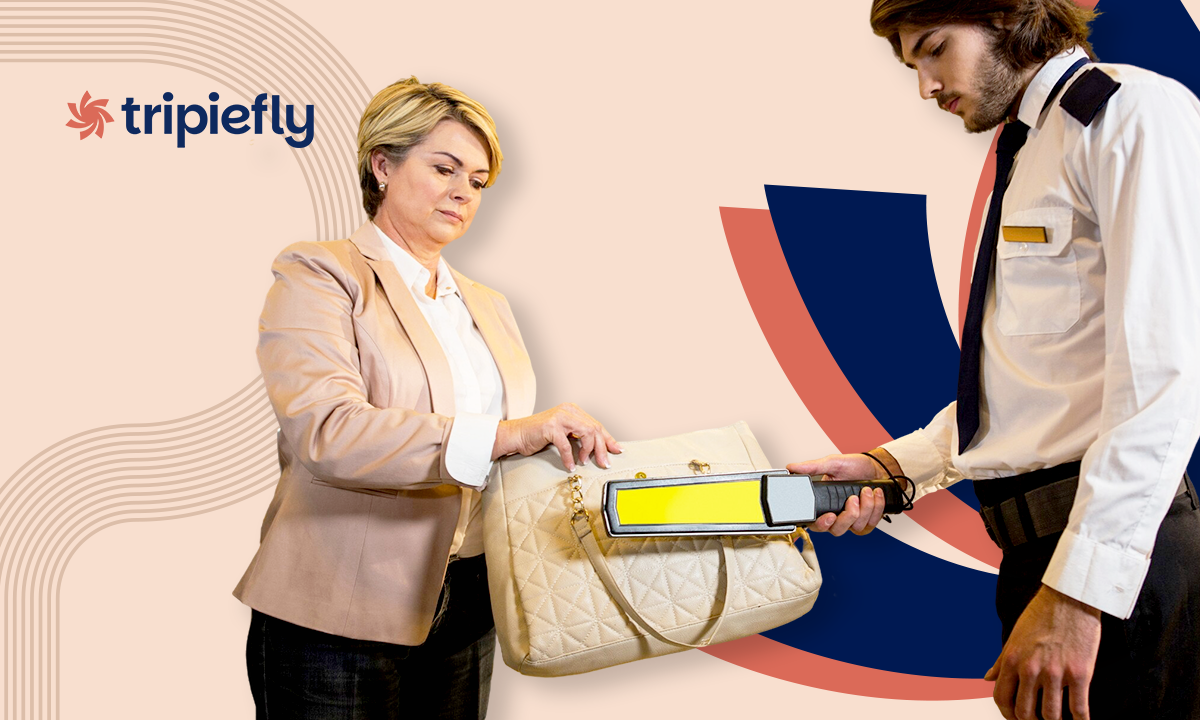
Packing for a flight is exciting and seems simple right until travelers start wondering if a charger, water bottle, shaving razor, medication, power bank, or random snack buried somewhere inside the backpack could become a problem at airport security. That’s why it is so important to understand TSA rules.
If you don’t know yet, a single prohibited object can lead to delays, discarded belongings, additional screening, or unexpected travel frustration, making it extremely important to verify MyTSA and updated TSA resources to check what is actually allowed before arriving at the airport.
TSA rules: what travelers can and cannot bring on a plane
TSA rules are responsible for determining which items travelers may carry through airport security checkpoints.
These rules determine which belongings must stay inside checked luggage or remain completely prohibited during flights as well.
Some of the everyday objects that are allowed inside carry-on bags include clothing, phones, laptops, chargers, books, snacks, and care products that follow quantity restrictions.
Other items receive stricter treatment depending on size, material, or safety concerns.
Usually, those are liquids, sharp objects, tools, batteries, sporting equipment, and self-defense items.
Some belongings may travel only inside checked baggage, while certain prohibited items cannot travel at all under standard TSA rules regardless of bag type or airline preference.
We know this is kinda confusing, and problems happen because ordinary objects fall under different airport rules once they move from daily life into a security screening environment.
TSA liquid rules for carry-on bags
One of the most important TSA rules for travelers involves liquids packed inside carry-on luggage during airport security screening.
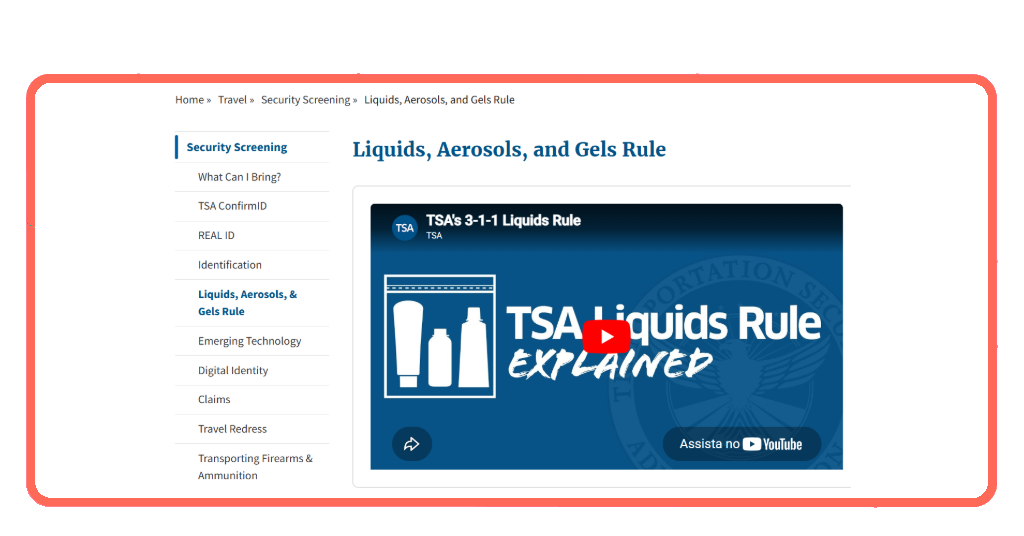
Under standard TSA guidelines, liquids carried inside cabin bags generally must follow the ‘3-1-1’ rule that limits containers to travel-sized quantities placed inside a resealable bag.
For example, shampoo, toothpaste, lotion, perfume, liquid makeup, gels, sprays, and similar products need to fit within those restrictions before passing through security checkpoints.
Meanwhile, larger liquid containers are allowed only inside checked baggage.
Unless they qualify for medical, baby-care, or certain special travel exceptions recognized through TSA screening procedures.
The easiest way to avoid delays is preparing liquids separately before arriving at security instead of reorganizing toiletries nervously in front of an increasingly impatient airport line.
Food, medicine and electronics: what needs extra attention
In addition, food, medication, and electronic devices receive additional attention during TSA screening.
That happens because some items require separate inspection or special handling procedures at airport checkpoints.
Laptops, tablets, cameras, and larger electronics often need to be removed from carry-on bags during screening unless the traveler uses approved expedited security programs.
Alongside, medications are generally allowed in both carry-on and checked bags.
Although travelers carrying liquid medicine, syringes, or medically necessary supplies may need additional verification during the screening process.
Food rules can vary depending on the item itself.
That goes especially with liquids, spreads, sauces, frozen products, or international travel restrictions connected to agricultural and customs regulations.
Portable batteries and power banks also deserve extra attention since many airlines and TSA guidelines restrict how lithium batteries travel, particularly inside checked luggage.
For many travelers, airport security gets much smoother once electronics, medicine, and special items are packed in accessible areas.
Step-by-step to packing your bag under TSA rules
Preparing luggage is easier if you use the TSA official website before the trip. Read the tutorial below by Tripiefly and pack your bag without concerns.
Step 1: access the TSA website before packing
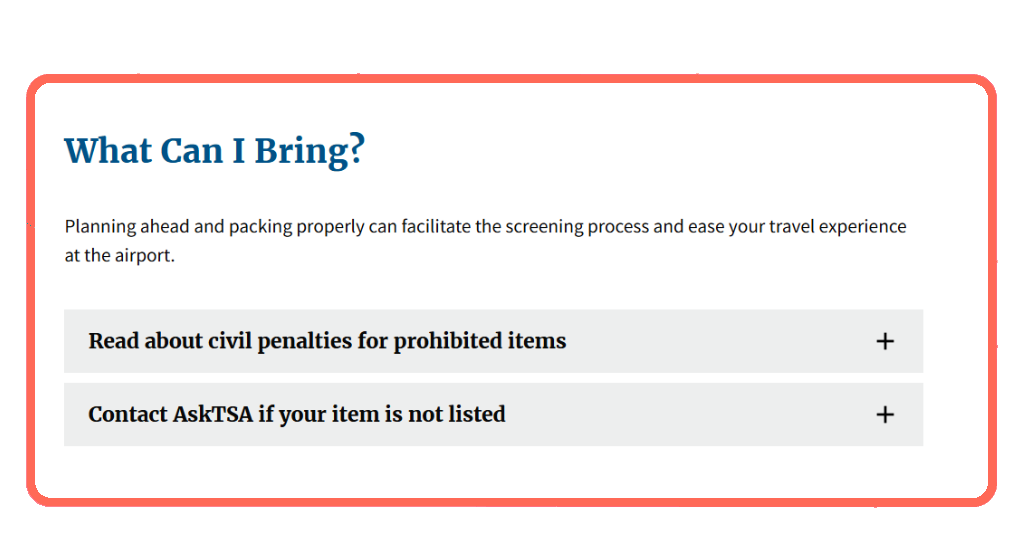
Open the official TSA portal and visit the ‘What Can I Bring?’ section to review updated airport security rules before organizing your luggage.
Step 2: search for specific travel items
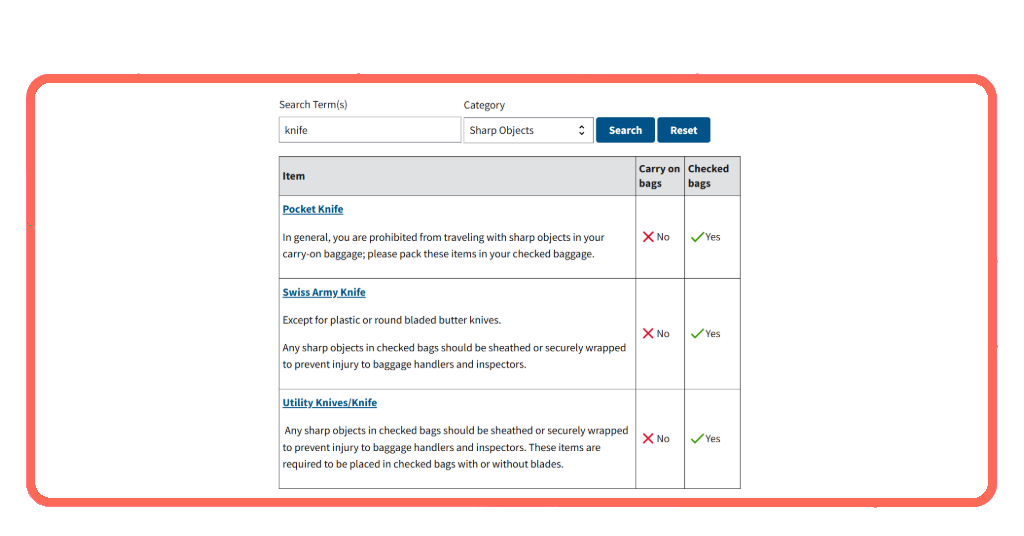
Once there, type the name of any questionable object. It can be liquids, razors, batteries, medication, electronics, or food to verify if the item is allowed in carry-on or checked bags.
Step 3: review carry-on liquid restrictions
Check current liquid limitations and prepare toiletries according to TSA carry-on guidelines before arriving at the airport.
What should go in a checked bag instead of a carry-on
You probably know, but it’s never enough to remember that some travel items create far fewer problems when packed inside checked luggage.
Larger liquid containers, full-size toiletries, certain sports equipment, tools, and many sharp objects are better suited for checked baggage due to TSA carry-on restrictions, for example.
Also, items like pocket knives, large scissors, aerosol products beyond approved limits, and certain outdoor or work-related gear may trigger additional screening.
That can lead even to confiscation attempts if placed inside cabin luggage.
Meanwhile, travelers prefer storing bulky clothing and nonessential accessories inside checked bags to keep carry-ons lighter and easier to manage during airport movement.
At the same time, important documents, medication, electronics, valuables, and essential travel items remain safer inside carry-on luggage.
Remember that sometimes checked baggage can be delayed or temporarily lost.
What happens when TSA finds a prohibited item?
If TSA officers discover a prohibited item during security screening, the outcome depends on the object itself, airport policies, and the level of potential safety concern involved.
In most situations, travelers are simply asked to remove the item from the carry-on bag, discard it voluntarily, or place it inside checked luggage if time and airport allow that option.
Still, certain prohibited belongings like oversized liquids, sharp tools, or restricted sporting equipment are commonly confiscated at checkpoints when they violate TSA carry-on rules.
More serious cases involving dangerous or illegal objects may trigger law enforcement involvement or expanded screening procedures depending on the circumstances.
The delay itself can create major travel problems during busy airport periods where extended screening may increase the risk of missing boarding times.
As we mentioned, the easiest way to avoid unnecessary stress is checking questionable items through the official TSA guidelines before leaving home.
Making airport security much less stressful
TSA rules can feel confusing at first, since ordinary travel items may fall under strict airport security restrictions depending on how they are packed and transported.
Understanding carry-on limits and prohibited item policies helps travelers avoid delays, confiscated belongings, and unnecessary problems during airport security checks.
Using official TSA resources before packing also makes trip preparation much easier for travelers carrying medication, special equipment, food items, or unusual belongings.
Just a few minutes spent checking TSA rules before leaving home can prevent hours of stress and awkward airport checkpoint surprises later.
Enjoyed this article? Save Tripiefly to your favorites and discover the most useful travel tips.