


Japan sits near the top of the dream-destination list for a lot of travelers around the world, but many postpone the trip for years after assuming that everything from flights to hotels will be prohibitively expensive. That perception made sense in the past when exchange rates were less favorable, but the situation is changing in recent years. As the Japanese yen weakened against the U.S. dollar, now we can plan traveling to Japan on a budget.
Nowadays, travelers have realized that careful planning can reduce costs without sacrificing the experience. Affordable business hotels, efficient public transportation, inexpensive dining options, and flight deal platforms have opened opportunities that didn’t exist for previous generations of visitors. Tripiefly will show how KAYAK Flights and Travel Search works, how to compare prices, monitor fare changes, and build a realistic trip to Japan on a budget.

Tips for sightseeing in Japan on a budget
If you thought that exploring Japan requires high spending, you’re not quite right.
Today, there are different possibilities, and that is added by many of the country’s most memorable attractions that are either free or relatively inexpensive.
For instance, some historic neighborhoods, public parks, temples, shrines, and observation areas can fill an itinerary without putting significant pressure on a travel budget.
Also, it is common for travelers to save money by focusing on walking-friendly districts instead of relying on paid attractions throughout the day.
Asakusa in Tokyo, Gion in Kyoto, or Dotonbori in Osaka are some locations that offer hours of exploration through architecture, local culture, and street life alone.
Alongside, when traveling Japan on a budget, visitors rely on Japan’s extensive rail and subway systems that provide efficient access to most destinations at a low cost.
Food is another area where assumptions differ from reality.
Convenience stores, ramen shops, curry restaurants, and local eateries frequently have satisfying meals at prices that compare favorably with many major U.S. cities.
Also, travelers who remain flexible with their schedules discover savings through attraction tickets and seasonal promotions that are available throughout the year.
A successful trip to Japan on a budget trip comes from combining small savings decisions, which together can free up more money for experiences that matter most during the journey.
How much do flights, hotels, food, and transport cost per day in Japan?
One of the biggest surprises for first-time visitors is that daily expenses in Japan can be way lower than expected.
While airfare remains the largest part of the budget, costs inside the country can be quite manageable when travelers make practical choices.
Round-trip flights from major U.S. cities commonly range from $700 to $1,400 per person, depending most on the departure airport and season.
That’s the moment when KAYAK Flights (iOS/Android) shows up! Travelers who use this app can find opportunities to reduce airfare costs significantly.
As you might expect, hotels vary considerably according to location and travel style.
Some budget-friendly business hotels will cost between $50 and $120 per night, while hostels and capsule hotels can lower accommodation expenses even further.
Food can be cheap as well. A meal at a local ramen shop or a simple curry restaurant costs between $5 and $12, so travelers can eat well without spending heavily throughout the day.
For transportation, subway and train expenses frequently fall between $5 and $15 for travelers who spend most of their time exploring a single city.
As a general guideline, budget-conscious visitors spend between $80 and $180 per day, excluding airfare.
And keeping that cost while maintaining a comfortable travel experience that includes accommodations, transportation, meals, and sightseeing activities.
Step-by-step: how to plan a trip to Japan using the app
A trip to Japan on a budget starts by saving on flights and hotels. Tripiefly will show in the guide below how to compare using the KAYAK app.
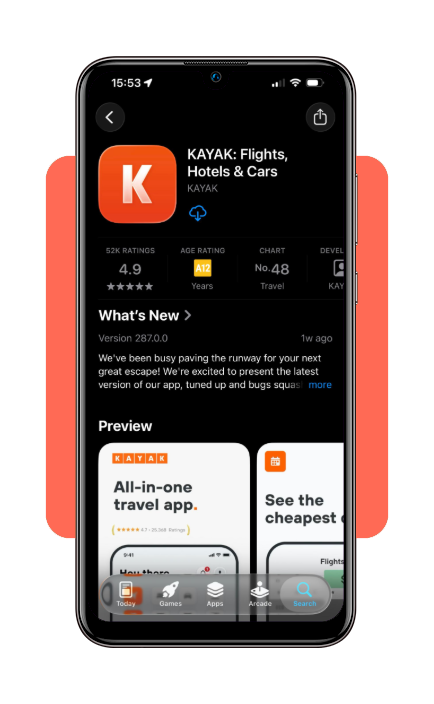
Step 1: download the app
To start your search, you will need to download and install KAYAK from the App Store or from the Play Store.
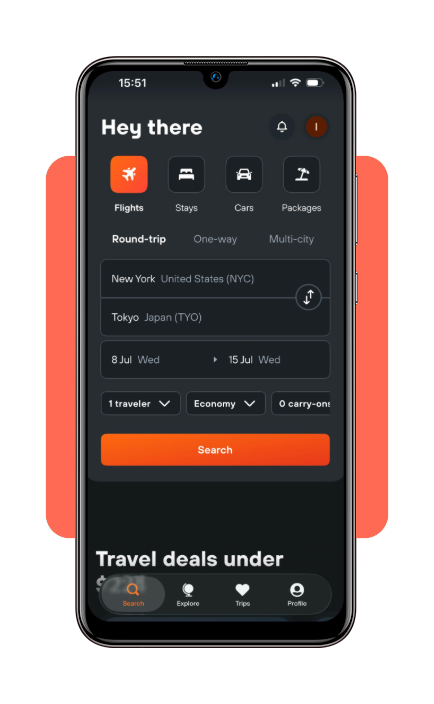
Step 2: search for flights
After installing, enter your departure city and preferred travel dates to compare airline prices and identify the most affordable travel periods.
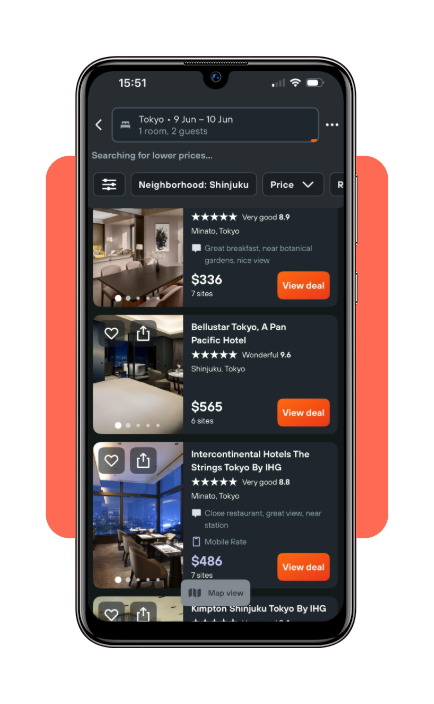
Step 3: compare hotel options
You can also search for accommodations in cities such as Tokyo, Kyoto, Osaka, or Hiroshima and filter results according to your budget and preferred location.
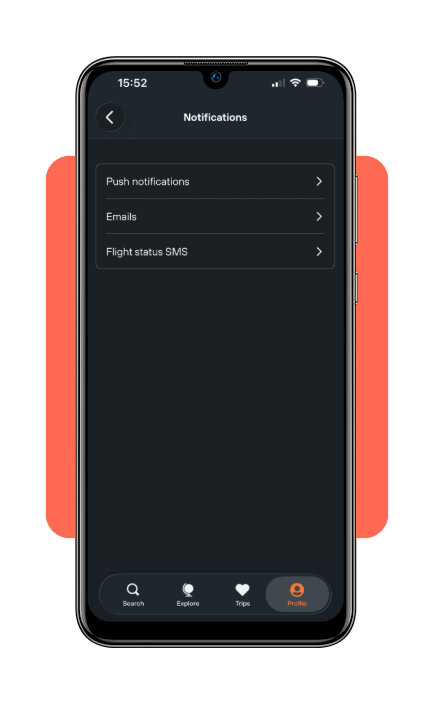
Step 4: set price alerts
Activate fare tracking so the app can notify you when flight prices change, helping you identify better booking opportunities.
Best time to visit Japan for lower prices
One thing you must know about that is travel costs in Japan can vary throughout the year, and that’s why timing is one of the most effective ways to reduce the trip budget.
As a consequence, differences of just a few weeks bring major crowd levels, and that affects hotel prices across major destinations.
In Japan, the most expensive periods are tied to major holidays and peak tourism seasons.
One of those is the cherry blossom season in late March and early April that attracts visitors from around the world, while the year-end holiday period also tends to push prices higher.
When planning a trip to Japan on a budget, travelers find better value during late autumn and parts of winter.
So January, February, November, and early December frequently offer lower hotel rates and more affordable airfare.
Meanwhile, summer can present mixed opportunities.
Although some flights may be competitively priced, high temperatures, humidity, and domestic travel demand during school holidays influence costs in certain regions.
Flexibility is important when traveling, and people who can adjust their departure dates by a few days can uncover significant savings.
Overall, if you’re planning Japan on a budget, the ideal balance of lower prices, comfortable weather, and manageable crowds is found during late autumn.
That’s the season when popular destinations remain beautiful while avoiding the highest travel costs of the year.
7-day Japan itinerary with costs per person from the U.S.
An itinerary in Japan can vary a lot because this country is a main destination for many different people across the globe.
Still, a one-week trip can be the ideal introduction to Japan, allowing travelers to experience major cities, historic districts, and local cuisine without rushing between destinations.
While costs vary according to departure city and travel style, a budget-conscious traveler can enjoy a memorable trip without excessive spending.
Days 1 through 3 can be spent in Tokyo, exploring the main areas: Asakusa, Shibuya, Akihabara, and Ueno.
In Tokyo, budget hotels usually range from $60 to $120 per night, while food and transportation often average between $25 and $50 per day.
Days 4 and 5 work well in Kyoto.
In Kyoto, you can find historic temples, traditional streets, public gardens, and cultural landmarks that make Kyoto one of Japan’s most rewarding destinations.
Over there, daily expenses remain similar to Tokyo, particularly when using public transportation and local restaurants.
Then, day 6 can be dedicated to Osaka, which is famous for its food culture, nightlife, and energetic atmosphere.
One of the best things about Osaka attractions is that they can be explored on foot, keeping transportation costs relatively low.
Then, the final day is reserved for last-minute sightseeing, shopping, buying souvenirs, or airport transfers before the return flight to the United States.
For someone traveling Japan on a budget, airfare may range from $700 to $1,400, accommodations from $420 to $840 for seven nights. Those are the major costs.
Adding to daily expenses, like food and transportation, will cost from $200 to $400 across the week.
As a result, visitors complete a 7-day Japan trip for approximately $1,400 to $2,700 per person, depending on travel dates, accommodation, departure city, and spending habits.
Triplefly recommends KAYAK (iOS/Android) and Travel Search to identify lower fares and accommodation deals, keeping the cost within budget while maximizing the experience.
Japan doesn’t have to be a luxury destination
Traveling to distant countries can be really expensive, but with realistic expectations and proper planning, Japan on a budget is more achievable than first-time visitors realize.
A successful trip comes down to understanding the major costs. Flights and hotels can be managed when options are compared early, and you can have flexibility with travel dates.
Also, choosing the right season, monitoring airfare trends, staying in business hotels, and relying on Japan’s excellent rail network can save hundreds of dollars during the trip.
If Japan has been sitting on your travel bucket list, use KAYAK Flights and Travel Search to compare prices and build an itinerary that fits your budget before making your reservations.
If you think this article was useful for your travels, save Tripiefly on your favorites and stay up-to-date with other travel tips.