


Among many passengers, the experience of first time flying begins inside an unfamiliar system of terminals, security checkpoints, and constantly changing departure screens. Large airports process tens of thousands of travelers daily, and even routine gate changes or delays can create confusion for inexperienced flyers.
That has increased demand for mobile apps that provide navigation and live flight information in real time. These apps offer gate updates, terminal maps, and security wait-time alerts in real time. For first-time flyers, the value is practical: fewer wrong turns, fewer missed announcements, and less time spent guessing where to go next.
First time flying: what to expect before, during, and after the airport
Air travel can look complicated from the outside, but it follows a predictable loop.
Your journey is divided into clear milestones: preparing your documents, clearing terminal security, waiting at your designated gate, and collecting your items at your final destination.
- Before the airport: you will pack your bags according to strict federal rules, complete your digital check-in, and secure your physical or digital boarding pass;
- During the airport: you will surrender large luggage pieces at the airline counter, pass through physical screening checkpoints, find your departure terminal, and board the aircraft;
- After the airport: once the plane lands, you will exit through the jet bridge, follow terminal signs to the baggage delivery area, grab your luggage, and head to ground transportation.
How early should beginners arrive before a flight?
The golden rule for air travel is to arrive 2 hours before a domestic flight and 3 hours before an international flight.
Assuming this is your first time flying, you should avoid trying to time your arrival perfectly.
Unexpected bottlenecks—like long lines at the check-in desk, dense traffic outside the terminal, or unpredicted holiday crowds at the security line—can easily cost you 30 to 45 minutes.
Arriving early gives you a comfortable safety cushion so you don’t have to sprint through the terminal to catch your plane.
Check-in, TSA security, and boarding: how each step works
Navigating your departure airport involves clearing three main gates. Understanding the layout ahead of time prevents you from feeling overwhelmed by the crowds.
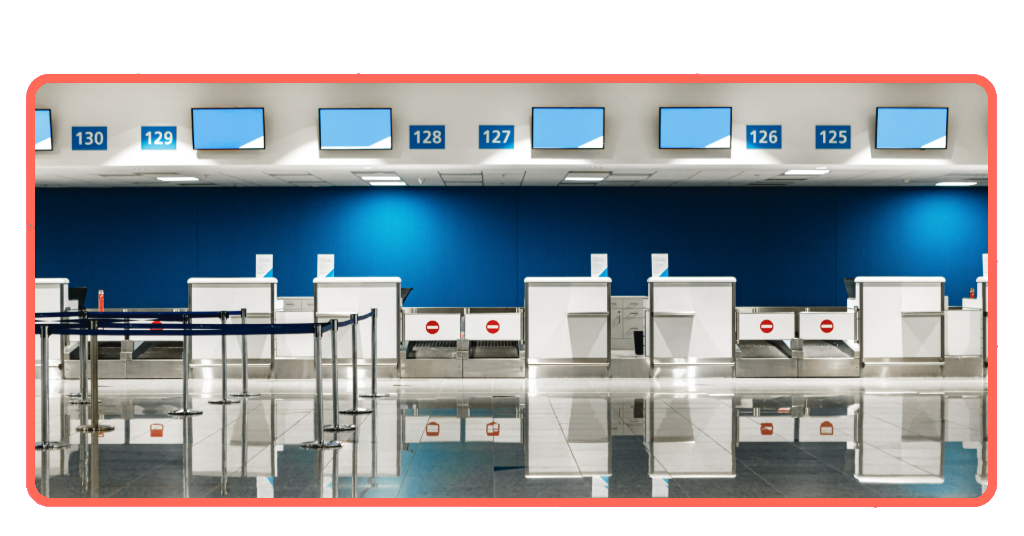
Step 1: the airline check-in desk
First time flying?
When you enter the departures terminal, look for the digital signs displaying your airline’s logo. If you are checking a large suitcase, you must hand it over to the agent at the counter so they can weigh it and label it for the cargo hold.
And if you only have a small carry-on bag and have already checked in online, you can skip this counter completely and head straight to security.
Step 2: TSA security checkpoints
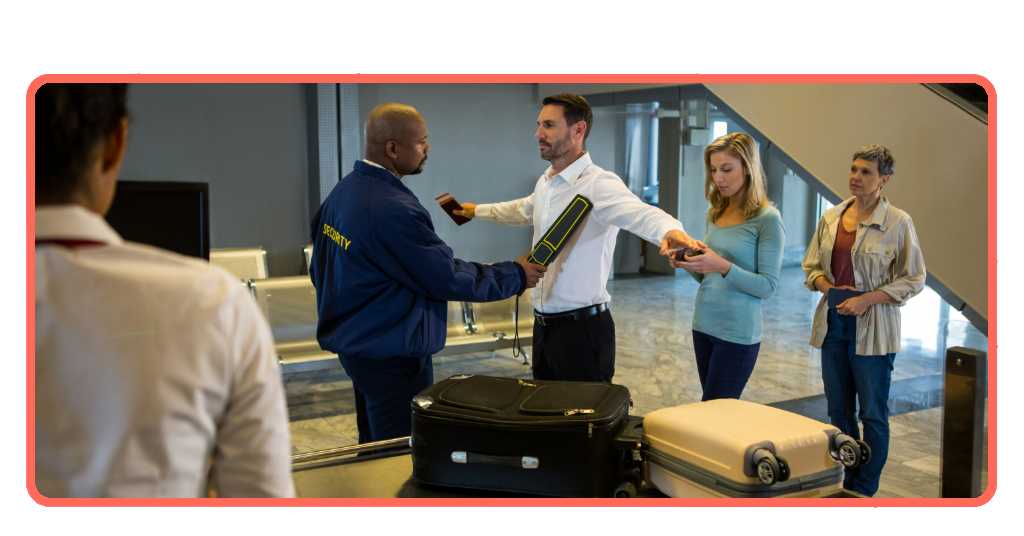
This is the phase that makes most beginners nervous, but it is straightforward if you know what to expect.
You will join the line, present your ID and boarding pass to the agent, and place your personal items into plastic bins to go through the X-ray machine.
Step 3: the boarding gate
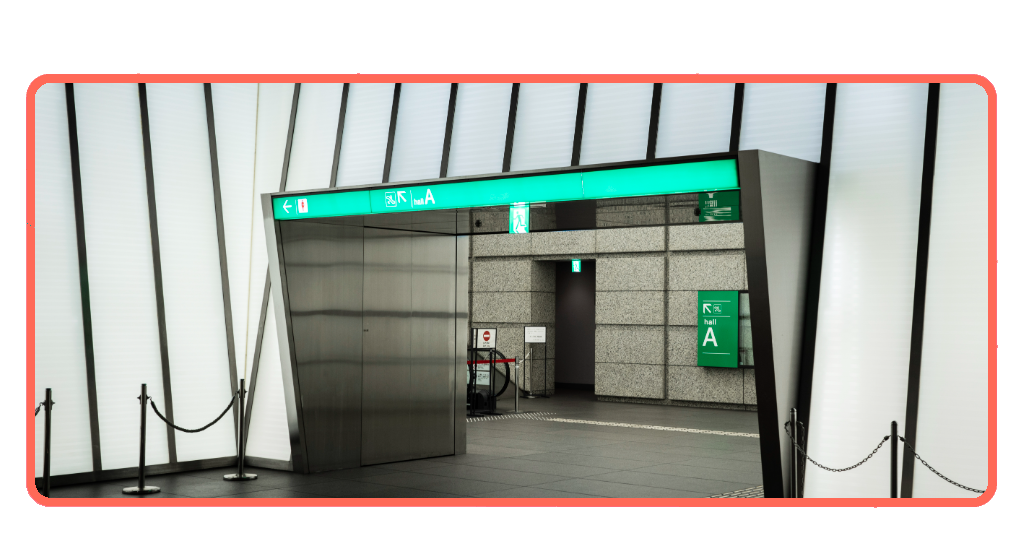
Once you clear security, you are officially in the departures lounge. Use the overhead airport signs to track down your specific gate number.
When the airline staff calls your boarding group, walk up to the gate reader, let them scan your boarding pass, and walk down the terminal tunnel to step onto the plane.
What TSA checks before your flight
The Transportation Security Administration (TSA) manages checkpoint screenings to ensure nothing dangerous enters the secure terminal area. You can review official updates directly on the TSA Travel Portal.
TSA checkpoint protocol
- ID Verification: match government photo ID against boarding pass;
- Body Screening: walk-through metal detector or Advanced Imaging Technology;
- Carry-on X-Ray: binary check of personal electronics and liquid limits.
When you reach the conveyor belt, you must place your phone, keys, wallet, and jacket into a plastic bin. You will also need to remove your shoes unless you have signed up for the TSA PreCheck program.
Large electronics (like laptops) and your clear liquids bag must be pulled out of your backpack and laid flat in a separate bin so the scanner can inspect them clearly.
The 3-1-1 liquids rule
You are allowed to bring liquids, gels, and aerosols in your carry-on bag only if they are in containers of 3.4 ounces (100 mL) or less, packed inside 1 clear, quart-sized plastic bag, per 1 passenger.
How to find your gate and boarding group
As for your first time flying, your entire terminal trajectory is printed onto your boarding pass. Look at the document carefully to locate two critical details:
Your Gate Number (the specific room where your plane is parked) and your Boarding Group (the letter or number that determines when you are allowed to walk onto the aircraft).
Airports frequently shuffle plane assignments due to maintenance or weather adjustments. Never rely entirely on your printed ticket for terminal directions.
As soon as you cross the security checkpoint, locate a large digital flight information display system (FIDS) screen. Match your flight number to check your current gate assignment and verify if your flight is on time.
First time flying mistakes that can cost extra money
Simple oversights during the packing phase can lead to unexpected expenses right at the boarding gate. Avoid these common pitfalls:
- Overweight checked luggage: most domestic airlines cap checked bags at 50 pounds (23 kg). Going even one pound over can trigger steep oversized baggage fees ranging from $50 to $100. Weigh your bags at home before leaving;
- Unapproved carry-on dimensions: budget airlines routinely measure carry-on bags using metal sizing boxes at the gate. If your backpack is too bulky to fit under the seat or in the overhead bin, you will be forced to pay an expensive gate-checking fee;
- Buying bottled water before security: you cannot bring full water bottles past the TSA officers. Instead of buying an expensive $6 water bottle inside the departure lounge, pack an empty reusable bottle in your backpack and fill it up for free at an airport water station once you pass screening.
Turning your first time flying into an easy win
Stepping onto an airplane for the first time flying can feel like entering a completely different world, but trust me, the process is manageable.
The secret to a less stressful airport experience comes down to preparation: packing your bags to meet TSA rules, arriving early, and letting some digital tracking tools do the heavy lifting for you.
For more step-by-step airport guides, packing checklists, and smart budget travel hacks, make sure to visit Tripiefly—your home for stress-free travel.