

The fantasy of digital nomad life often revolves around flexible schedules and the freedom to work from anywhere. But long-term travel also comes with quieter anxieties, particularly when illness or accidents happen far from home. For many remote workers, nomad health insurance has become a practical necessity rather than an optional expense.
Traditional insurance plans rarely adapt well to a borderless lifestyle. A medical emergency abroad can quickly become financially overwhelming, especially in countries with expensive private healthcare systems. Specialized nomad insurance plans offer portable international coverage, giving travelers a more reliable safety net as they move between cities, countries and time zones.
Get nomad health insurance with SafetyWing
For a generation that treats airports like commuter hubs and cafés as temporary offices, traditional insurance policies have struggled to keep pace.
That gap helped fuel the rise of SafetyWing, a platform built specifically for remote workers, freelancers and long-term travelers moving between countries with increasing frequency.
Founded by entrepreneurs within the digital nomad community itself, the company approaches nomad health insurance with the logic of a subscription service: flexible, mobile and designed to function across borders rather than within them.
The plan can be bought while you are already abroad, works on a subscription-like basis, and offers global coverage in 180+ countries, with a straightforward claims process and 24/7 human support.
SafetyWing says it now covers more than 25,000 nomads and remote workers worldwide, and its Nomad Care Map lets members find hospitals, clinics, and doctors using verified reviews from other members.
For people who live and work on the move, coverage should feel as flexible as life itself.
Plans and coverage explained
SafetyWing currently separates its products into two main categories: Nomad Insurance and Remote Health. While both target people living internationally, they are built for very different lifestyles and budgets.
Nomad Insurance
Nomad Insurance focuses on unexpected emergencies, functioning more like travel medical coverage for freelancers, backpackers, and digital nomads moving frequently between countries.
The plan includes coverage for hospital stays, urgent medical treatment, ambulance services, emergency evacuation, and some travel-related disruptions like trip delays or lost checked luggage.
As for 2026, SafetyWing tiers are Essential (travel medical) and Complete (full health insurance), so nomads can choose between basic emergency care and a full health plan that includes routine checkups.
One of its more unusual features is limited home-country coverage, allowing members to remain protected during short visits back home.
Policies now explicitly include incidental visits back home for up to 30 days every 90 days (15 days for U.S. residents), ensuring you aren’t left without protection during brief returns.
Another 2026 feature is the optional electronics add-on, providing up to $2,000 per item for stolen laptops, phones, and cameras.
The plan operates on a rolling monthly subscription and can even be purchased after the trip has already started, something still relatively rare in the travel insurance industry.
Nomad Insurance Essential
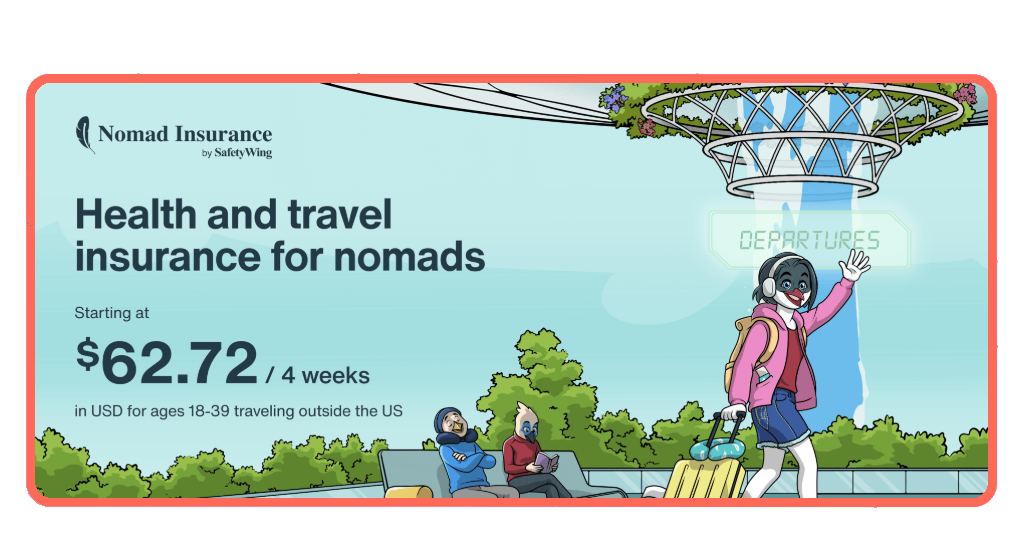
- Starting price: $62.72 per 4 weeks (for ages 18–39, excluding U.S. coverage);
- Key coverage: includes hospital stays, surgeries, emergency dental (up to $1,000), and medical evacuation ($100,000 lifetime max);
- Travel perks: provides coverage for lost checked luggage (up to $3,000), travel delays ($150/day), and trip interruption;
- Subscription model: 28-day recurring cycle that can be canceled at any time.
Nomad Insurance Complete
- Starting price: $177.50 per month (for ages 18–39, excluding U.S. coverage);
- Comprehensive care: everything in the Essential plan plus routine check-ups, wellness therapies (like chiropractic or acupuncture), and mental health support;
- Extended benefits: covers cancer treatments, maternity care (after a 10-month waiting period), and a higher overall medical limit of $1,500,000;
- Commitment: requires a 12-month commitment, though paying annually often unlocks a 10% discount.
Remote Health
Remote Health, meanwhile, is closer to a traditional global health insurance plan aimed at long-term expatriates and remote companies and families living abroad full time.
It offers broader and more customizable protection.
In addition to emergency care, it can include routine doctor visits, mental health support, maternity care, cancer treatment, preventive screenings, and management for chronic conditions, depending on the selected tier.
Users can choose between different levels of coverage and add-ons, making it closer to an international private healthcare plan than a travel-focused safety net.
The trade-off, naturally, is cost: Remote Health is significantly more expensive but designed for people treating international living as a permanent reality rather than a temporary adventure.
How to pick the best plan for you
Choosing the right nomad health insurance requires an honest assessment of your travel style and risk tolerance.
If you are an adventure seeker who spends your weekends paragliding or scuba diving, you may need to add an ‘adventure sports’ rider to your policy, as standard plans often exclude high-risk activities.
Conversely, if your ‘adventure’ is simply finding the best coffee in Lisbon, a standard, lower-cost plan will suffice. Price is often the deciding factor, and the industry has become remarkably competitive.
You can often secure a robust nomad health insurance policy for roughly the price of a daily latte. When comparing plans, look closely at the deductible—the amount you pay out of pocket before the insurance kicks in.
A $250 deductible is common and keeps the monthly premium low, but if you prefer $0 out-of-pocket costs, be prepared for a slightly higher monthly subscription fee.
Other important health tips for nomads
While having a nomad health insurance card on your phone is essential, prevention remains the best medicine. Before heading to a new region, check the local vaccine requirements and the prevalence of waterborne illnesses.
Keeping a basic first-aid kit with familiar medications for common ailments like headaches or digestive issues can save you a trip to the pharmacy at 2:00 AM in a city where you don’t speak the language.
Another pro tip for the digital nomad is to keep a digital folder with your blood type, known allergies, and your insurance policy number in an offline-accessible app.
In the event of an emergency, having this information ready for a local doctor can significantly speed up your treatment.
Using a nomad health insurance app with 24/7 support also allows you to ‘chat’ with a representative who can direct you to the nearest vetted clinic, saving you from the stress of guessing which local hospital is the most reliable.
A non-negotiable tool
Is nomad health insurance a luxury?
Only if you consider your health and financial security a luxury.
For anyone living outside their home country for more than a few weeks, it allows them to focus on their work and their wanderlust without the nagging ‘what if’ looming in the back of their mind.
Feature summary
For more expert advice on protecting your lifestyle and navigating global living, make sure to visit Tripiefly, your home for travel wisdom and digital nomad resources.