


Getting turned away at the boarding gate over a document issue nobody flagged ahead of time is the kind of travel nightmare that’s 100% avoidable, yet it happens to US travelers who rely on outdated blogs for entry rules all the time. An American passport already unlocks a solid list of visa-free countries, and the official source for those rules is sitting right there on your browser.
The State Department’s International Travel portal protects personal details from scam websites while providing all the information you need for traveling abroad. This Tripiefly guide outlines the steps to search the official registry and check current entry conditions for global destinations. Keep reading and learn how to walk out of the terminal ready to enjoy every minute of your trip.
You might like: Red-Eye Flight Deals: How to Find Cheaper Overnight Flights
Visa-free countries for U.S. travelers: what does it mean?
If you’ve never stopped to check what your US passport unlocks at international borders, you’re leaving a pretty significant travel advantage sitting on the table completely unused.
Tucked inside that little blue booklet is access to a long list of visa-free countries that let you skip the embassy appointments, the application fees, and the weeks of waiting for approval.
The catch is that free entry doesn’t look the same everywhere, and the rules tied to each destination are specific enough that arriving unprepared at the border creates real headaches.
Visa-free vs visa on arrival explained
These two entry types get mixed up all the time, but they work differently in practice, and learning the distinction is important before any international flight gets booked.
Traveling visa-free means arriving at a foreign border with just a valid passport and walking through without paying any fee or filling out any application beforehand.
Visa on arrival works differently. The traveler still gets in, but there’s a fee to pay and sometimes a form to fill out right there at the immigration counter before proceeding.
Countries where a tourist card applies
A tourist card sits somewhere between a visa and free entry, and a handful of popular destinations for U.S. travelers require one before or upon arrival at the border.
Some visa-free countries still ask for a tourist card as a condition of entry, so it’s worth checking the specific requirements for each destination well before the departure date arrives.
The card itself is inexpensive and takes minutes to sort out, but arriving without it at a destination that requires one creates real problems at the immigration counter.
- Cuba (purchased from the airline or travel agency before departure, around $ 25.00);
- Dominican Republic (tourist card issued at the point of entry);
- Bolivia (entry card completed on arrival).
Entry limits that catch travelers off guard
Free entry doesn’t mean unlimited stay, and plenty of American travelers have been caught off guard by how strict some countries are about enforcing their maximum stay rules.
The Schengen Area in Europe is one of the most common examples. The visa-free countries in that zone share a combined 90-day limit within any 180-day window across the region.
Overstaying an entry limit, even by a single day, leads to fines, deportation, or a travel ban that affects future trips to that destination and sometimes neighboring countries as well.
Popular destinations Americans can visit without a visa
US travelers can enter over 160 destinations worldwide without a traditional visa application, a number that puts the American passport among the most travel-friendly documents in the world.
That access spans every major region on the map, and the visa-free countries included range from quick Caribbean getaways to extended stays across Europe, Asia, and Latin America.
Entry conditions still vary from one place to the next, so knowing what each destination requires at the border keeps the arrival experience from turning into an unexpected scramble.
What documents may still be required at entry
Skipping the visa process doesn’t mean arriving at a foreign border empty-handed, and immigration officers still ask for specific documents before waving anyone through.
A return flight ticket is one of the most requested items at border control, since it proves the traveler has a confirmed plan to leave before the permitted stay runs out.
Proof of accommodation, travel insurance, and sufficient funds for the trip are also checked at certain borders, and having those documents ready on a phone or printed out saves real time.
Destinations with the longest free stays
If a longer trip is on the table, the destination choice makes a significant difference in how many days are available before the legal stay limit kicks in and forces a departure.
The visa-free countries that grant US travelers the most time include some genuinely appealing options, and a few of them allow stays long enough to explore well beyond the tourist trail.
Picking a destination based on the permitted stay changes the entire trip, and several of these countries offer enough time to live like a local rather than rush through as a tourist.
- Mexico: up to 180 days;
- Canada: up to 180 days;
- Costa Rica: up to 90 days;
- Barbados: up to 6 months;
- Bermuda: up to 6 months;
- Dominica: up to 6 months;
- Fiji: up to 4 months;
- Colombia: up to 90 days.
Regions grouped by entry rules
Breaking destinations down by region makes the planning process manageable, especially when a trip involves multiple countries, and each one carries its own set of entry conditions.
The Caribbean tends to be one of the more welcoming regions for Americans, with most island nations granting entry for anywhere between 30 days and 6 months without any paperwork.
The visa-free countries spread across Asia and the Pacific work under their own rules, and stay limits in that region range from just 2 weeks in some destinations to 90 days or more in others.
You might like: Australian visa: check your eligibility for visiting Australia
Step-by-step guide to checking visa-free countries
The entry rules for international destinations change more frequently than most travel blogs keep up with, and booking a flight based on outdated information is a risk that’s easy to avoid.
A quick check through the official source before confirming any reservation takes about five minutes and covers everything from permitted stay limits to documents required at the border.
That same process also flags the visa-free countries where a digital travel authorization or pre-registration fee applies, which are details that catch a surprising number of travelers off guard.
Step 1: pull up the State Department database
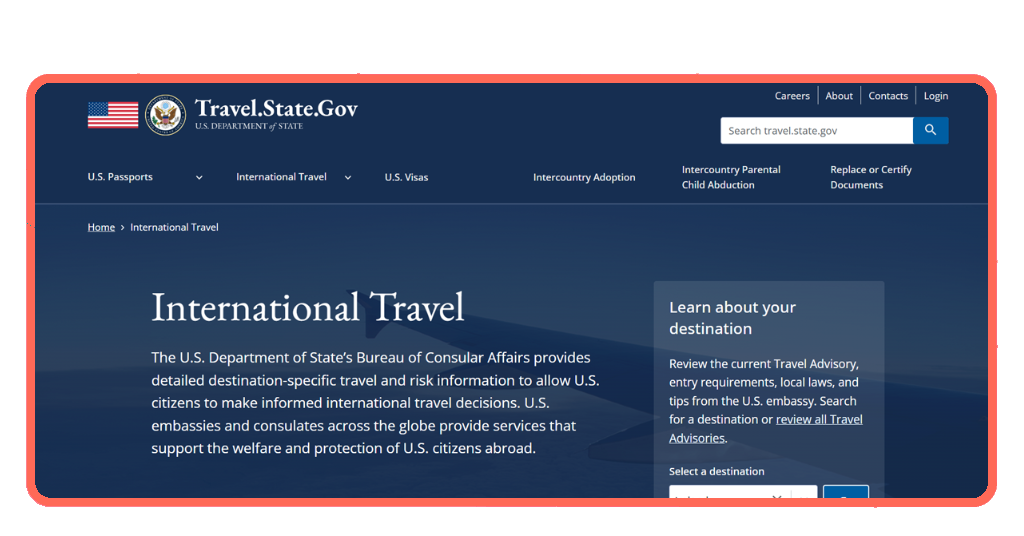
The US Department of State’s International Travel portal is the most reliable starting point for checking entry requirements for any destination on the travel list.
Once on the site, the ‘learn about your destination’ search bar lets you pull up a full country profile covering entry rules, travel advisories, local laws, and embassy contact details.
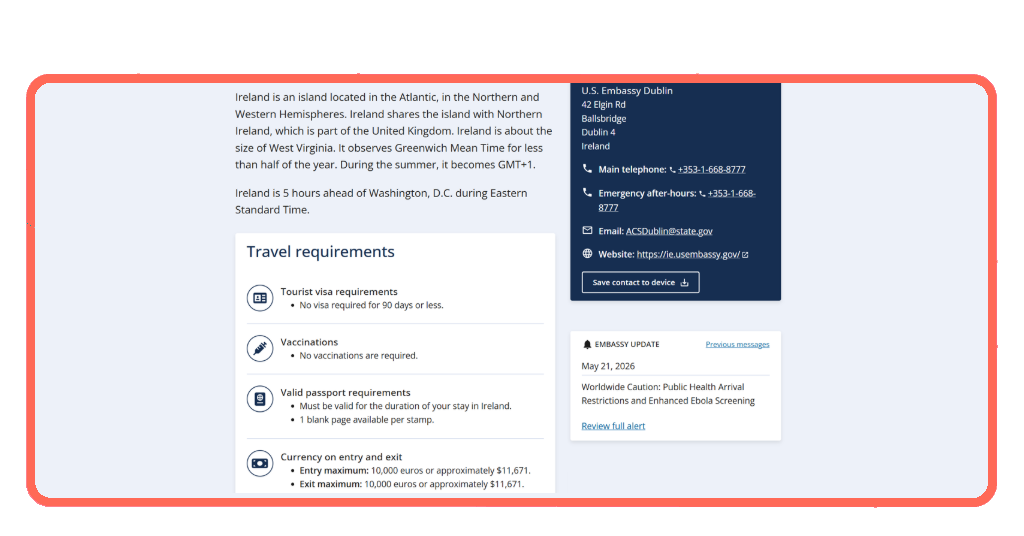
The ‘entry’, ‘exit’, and ‘visa requirements’ section within each country profile is where the specific border conditions live, and that’s the section worth reading carefully.
Step 2: confirm your passport meets entry standards
A valid passport isn’t always enough on its own, and plenty of countries turn travelers away at the border for failing to meet the validity requirements tied to their specific entry rules.
The visa-free countries on the American passport’s access list require at least 6 months of remaining validity beyond the departure date, so a passport expiring soon is a real problem.
Beyond the expiration date, blank pages matter too, and most destinations ask for at least 2 available stamp pages before an immigration officer will clear anyone through the border.
Step 3: check for ETAs and pre-registration fees
Arriving at a destination that requires a pre-approved travel authorization without having one sorted beforehand is the kind of mistake that grounds a trip before it even starts.
An Electronic Travel Authorization, or ETA, is a digital permit tied to the passport that some countries require even when no physical visa is needed for entry at the border.
Australia, Canada, and several other popular destinations require an ETA, and the visa-free countries rolling out Europe’s upcoming ETIAS system will add another layer to that checklist soon.
Visa-free travel, passport validity, and travel insurance
Sorting out the destination and checking entry requirements is only part of the pre-trip process, and the details that sit just outside that checklist are the ones that tend to create issues.
Passport validity and travel insurance fall into a category that travelers push to the last minute, and both of them carry consequences serious enough to derail a confirmed trip entirely.
Covering those two areas before departure applies to every international trip, and it’s especially relevant for the visa-free countries where travelers assume the lighter entry process means less preparation.
Passport validity rules before you fly
A passport that’s technically valid on departure day isn’t always valid enough for the country receiving the traveler, and the difference between those two things matters at the border.
The 6-month validity rule is the most widely applied standard across international destinations, meaning the passport needs to remain valid for at least 6 months past the planned return date.
Renewing a passport ahead of any travel removes that risk, and the processing times through the State Department are long enough that leaving it late creates unnecessary pressure.
Travel insurance and why it still applies
A visa-free entry process removes the paperwork burden before departure, but it does nothing to cover the costs of a medical emergency, a cancelled flight, or lost luggage once the trip is underway.
The visa-free countries that are most popular with US travelers don’t require travel insurance as a condition of entry, but that doesn’t mean arriving without a policy in place is a reasonable call.
A hospital visit abroad without coverage runs into thousands of dollars, and the cost of an emergency evacuation back to the US can reach figures that insurance makes look reasonable.
Digital permits tied to visa-free access
Some destinations have added a digital pre-clearance step that sits between a traditional visa and completely free access, and missing it before departure causes real issues at the border.
Australia and New Zealand already run ETA systems where the visa-free countries’ digital permit needs to be secured and linked to the passport well before the departure date.
Europe’s upcoming ETIAS registration will add another pre-departure step for travelers heading into the Schengen Area, and it’s the kind of requirement that’s easy to overlook until it’s too late.
You might like: Find cheap stays anywhere: download this free hostel app
Pack your bags and skip the visa line
A US passport opens up more international destinations than most travelers ever put to use, and the entry rules for those places are easier to navigate than they look.
In this Tripiefly guide, we covered stay limits, border documents, and the visa-free countries that let Americans skip the application process entirely before booking a flight abroad.
Keep browsing Tripiefly for more articles on international travel, from entry requirements to destination guides that take the guesswork out of planning a trip abroad.