


Every seasoned traveler has encountered this almost mythical folklore surrounding the flights: that if you wake up at exactly 3:00 AM on a Tuesday, clear your browser cookies, and sacrifice a carry-on bag to the corporate gods, a magically best time to book flights will manifest on your screen. Airlines treat their dynamic pricing algorithms like classified state secrets, leaving consumers to hit refresh on their screens like hyperactive day-traders.
The aviation sector feeds on this booking anxiety, knowing full well that an exhausted traveler will eventually surrender their credit card out of panic. Thankfully, extensive historical data tracks when the baseline cost of airfare actually dips, proving that locating the best time to book flights is a science rather than an exercise in superstitious internet rituals.
What is the best time to book flights to pay less?
Let us immediately dismantle the oldest, most persistent myth on the internet: buying your ticket on a specific day of the week does not save you money.
Massive data audits across millions of global itineraries reveal that purchasing a ticket on a Tuesday or Wednesday versus a Sunday results in an average price variation of less than 1.5%.
The airline algorithms update hundreds of times per second, making the specific day you purchase your ticket almost entirely irrelevant.
Instead, the true best time to book flights is dictated by your departure date and the rolling seasonal demand of your route. Historically, the actual savings manifest when you choose to fly midweek rather than over the weekend.
Opting for a Monday, Tuesday, or Wednesday departure instead of a weekend one can save money: Google’s analysis of U.S. fares found that midweek departures have been about 12% cheaper on average than weekend departures, and about 20% cheaper when international destinations are excluded.
The corporate masterclass in budget travel isn’t about the hour you sit at your keyboard, but about the time of the week you physically walk through the terminal jet bridge.
How far in advance to book domestic flights
When mapping out domestic travel, buying your ticket six months ahead is often just as financially damaging as waiting until the absolute last minute.
Airlines rarely offer aggressive discounts half a year out because their booking models are still gauging baseline corporate demand.
Domestic booking timeline
- 0 days (takeoff) to 21 days: prices skyrocket dramatically;
- 21 days to 52 days: fares hit their absolute lowest range;
- 52 days+ to 180 days: stable but higher introductory rates;
For standard domestic travel, the absolute best time to book flights lands firmly within the ‘Goldilocks Window’ of 21 to 52 days before takeoff.
Fares typically hit their lowest point around 38 days before departure, as airlines scramble to fill remaining cabin space before structural corporate travelers snap up last-minute inventory.
If you cross inside the 3-week boundary, the predictive models recognize your desperation, and the baseline cost of economy tickets begins to climb aggressively.
Why holiday flights get expensive faster
The standard multi-week booking windows completely fall apart the moment major federal holidays enter the equation.
When millions of travelers collectively attempt to squeeze through the airport gates over Thanksgiving, Christmas, or Spring Break, the supply-and-demand dynamic shifts entirely in the airlines’ favor.
For high-stress winter holiday travel, the best time to book flights opens much earlier, tracking between 32 and 73 days before departure.
Because holiday planes are virtually guaranteed to fly at 100% capacity, carriers have zero financial incentive to host last-minute flash sales.
Waiting for a late price drop during Christmas week is a fast track to financial self-sabotage; if you haven’t locked in your holiday route by mid-November, you are voluntarily entering a premium-pricing trap.
Google Flights: about the tool
If you are still manually hopping between independent carrier websites to track down price drops, you are fighting a losing digital battle.
Google Flights operates as a free data aggregator that intercepts airline pricing strategies, turning multi-layered fare structures into a more easily digestible map.
Key features that matter
- The price insights engine: this feature flags whether the current fare is considered low, typical, or high based on a rolling 12-month historical baseline;
- The ‘Cheapest’ tab: this sorting mechanism prioritizes rock-bottom pricing over comfort, surfacing deep discounts that standard travel engines hide due to long layovers or mixed-carrier bookings;
- The explore map: this is for your open-ended travel planning. You simply input your home airport, type ‘Anywhere’ as your destination, select a flexible window like ‘a one-week trip in the next six months,’ and the system generates an interactive globe highlighting the cheapest fares available across the planet.
Step-by-step to tracking the best time to book flights
You do not need to spend your lunch hour checking prices. Configure Google Flights to do the forensic surveillance on your behalf, and make sure you capture the best time to book flights.
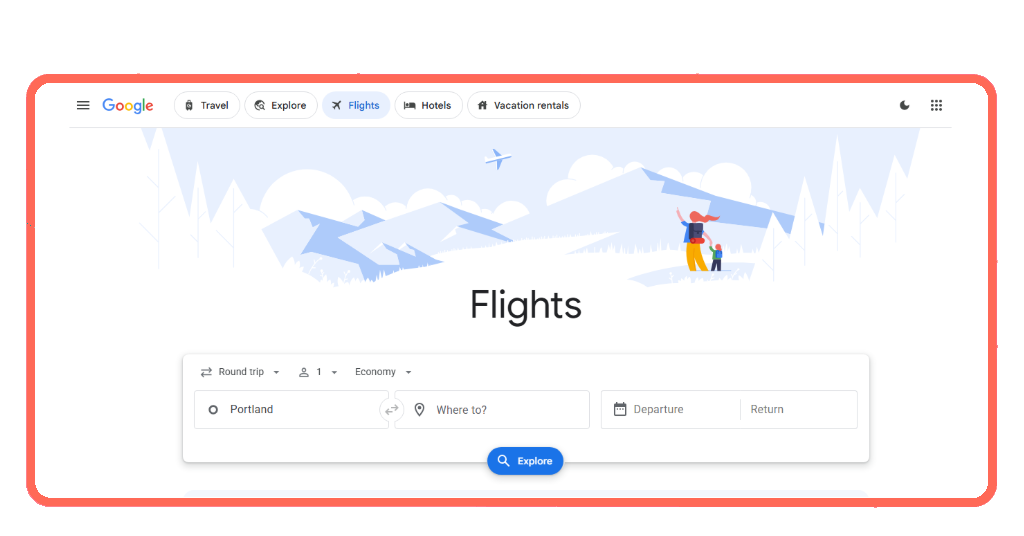
Step 1: input your core route parameters
Head to the Google Flights Portal. Input your primary origin city and target destination.
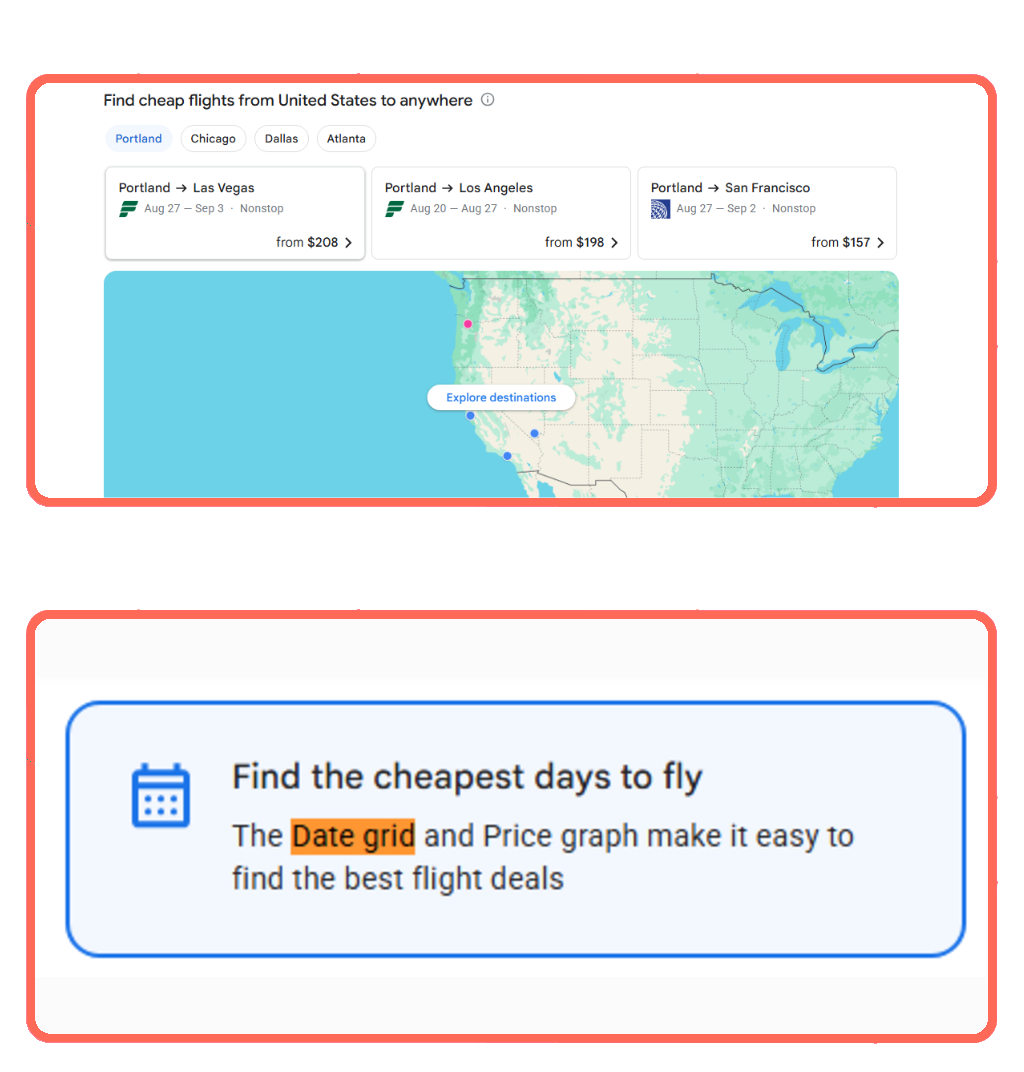
Step 2: analyze the date grid and price graph
Open the calendar tool or click the ‘Date grid’ overlay. The interface will highlight cheaper travel dates in bright green, showing you instantly how shifting your vacation by 24 to 48 hours can save you hundreds of dollars.
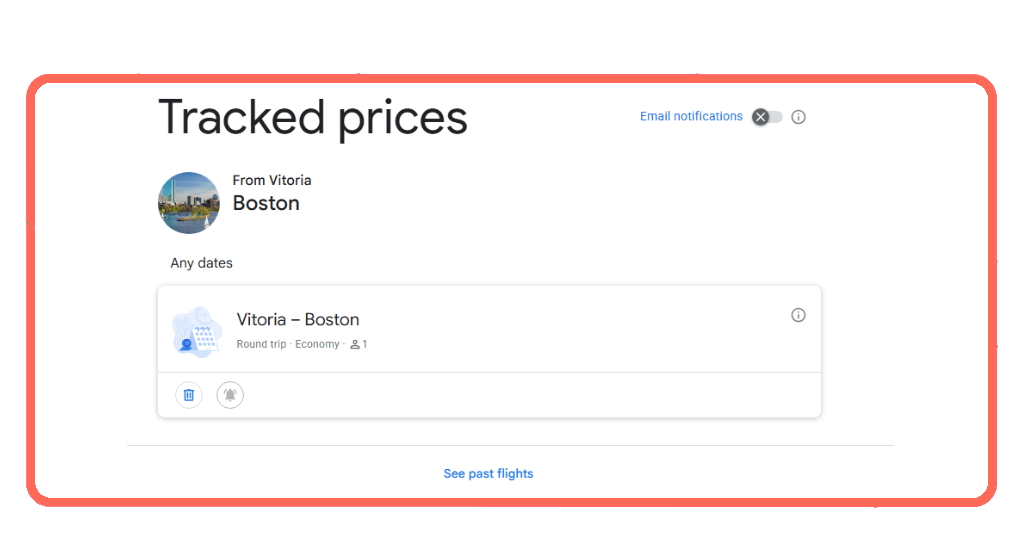
Step 3: activate the track prices toggle
Flip the ‘Track prices‘ switch at the top of the search grid. You can choose to track specific dates for a set vacation or select ‘Any dates’ to catch random, massive structural price drops over the next six months.
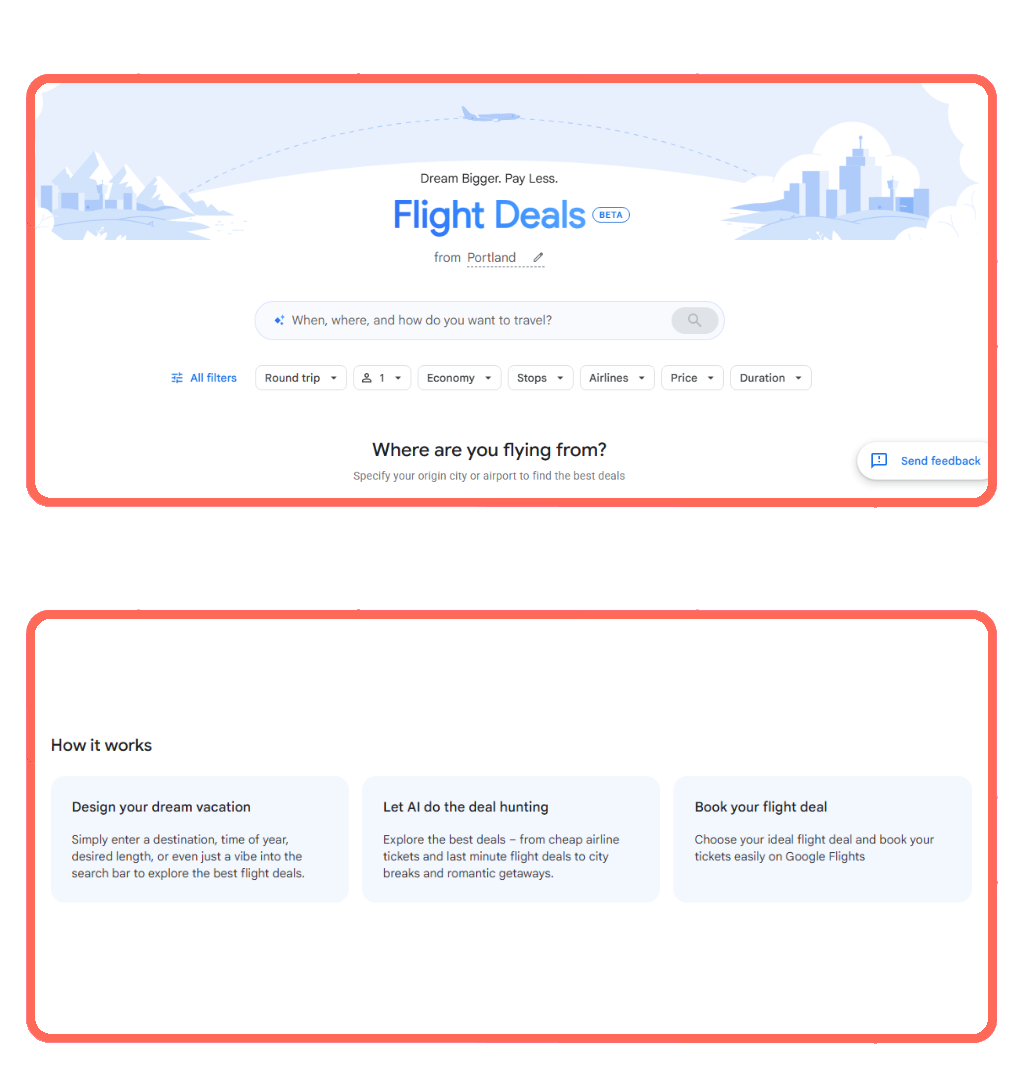
Step 4: let the AI underwriting notify you
The algorithm monitors the global inventory in the background. The exact second fares drop below the historical average, an automated alert drops into your email inbox, giving you the precise cue to pull the trigger.
How to compare nonstop flights, layovers and baggage fees
As you hunt for the best time to book flights, try to remember that the cheapest headline price isn’t always the cheapest overall journey.
A rock-bottom $99 ticket on a budget airline can quickly turn into an expensive nightmare once you factor in unbundled add-ons.
Willingness to accept a single layover is historically one of your best bets for maximizing savings: in the same Google analysis, nonstop fares averaged about 20% more than flights with stops.
However, always expand the flight details tab inside the search engine to review baggage restrictions.
If a legacy carrier includes a carry-on bag while an ultra-low-cost competitor charges $70 for it at the gate, the premium airline is often the true financial winner.
And if you are looking to offset these structural costs, smart travelers frequently look into converting their everyday credit card rewards into real cash to build a vacation fund.
Taking control of your travel budget
By setting your alerts early, looking past the deceptive base fares of low-cost carriers, and remaining open to midweek departures, you can navigate the aviation marketplace without draining your savings.
For more reviews, baggage guides, and aviation budgeting strategies, make sure to anchor your planning at Tripiefly—your launchpad for travel.