


Has planning your trip to Japan been 10% exciting and 90% staring at a subway map? Let me guess: you’ve seen the TikToks of Shibuya Crossing and the fluffy pancakes, but the logistics of navigating Tokyo attractions without a local guide felt like trying to solve a Rubik’s cube in the dark. Tokyo may be the ultimate ‘cool’ destination, but the language barrier and the sheer scale of the city are enough to give anyone some anxiety before they pack their bags.
If you’re worried about wandering aimlessly or getting lost in Shinjuku Station for three hours (a rite of passage, honestly), you need more than just a Pinterest board. Having a tool that works 100% offline is a flex for a modern traveler. We’re in the 2020s—you shouldn’t be paying roaming fees just to find a temple. Here is a guide to seeing the best Tokyo attractions without losing your mind. Read this and more on Tripiefly.
Must-see Tokyo attractions for tourists
The big hitters are classics for a reason, but the trick is how you approach them.
Sensō-ji Temple in Asakusa is arguably the most famous of all Tokyo attractions, but if you show up at noon, you’re basically just touring a crowd of selfie sticks.
My research suggests going early—like 7:00 AM early. You get to see the red lanterns of Kaminarimon in the soft morning light before the souvenir shops on Nakamise-dori even open.
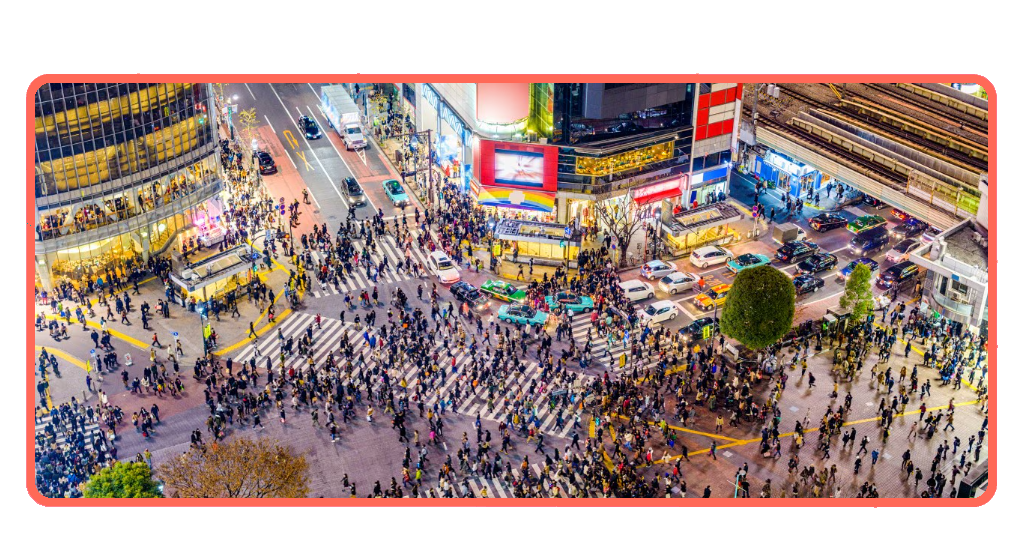
On the flip side, you have the hyper-modern landmarks. Shibuya Crossing is the one everyone knows, but for a 2026 perspective, Shibuya Sky is the real winner.
It’s an open-air observation deck that makes you feel like you’re floating over the city. If you want that iconic Mount Fuji-meets-skyscrapers shot, this is where you go.
Just below it, the Hachiko Statue remains the city’s most humble, yet essential, meeting point.
How to plan your visit
The most practical advice I’ve found is to stop thinking about Tokyo as one giant destination. Instead, treat it as a cluster of villages.
The Tokyo attractions on your list are likely spread out, so the most efficient way to plan is by grouping them by train lines. The Yamanote Line (the big green loop) is your best friend.
It connects Shinjuku, Shibuya, Harajuku, and Ueno. If you’re hitting Tokyo attractions in the east, like the newly reopened Edo-Tokyo Museum (which finally finished its massive renovation in March 2026), stay in that area for the day.
Trying to cross the city twice in 24 hours is the fastest way to burn out and spend your entire budget on subway fares.
Ideal travel itinerary
If I were your unofficial tour guide (the kind that knows where the good cheap ramen is), here is how I’d spend three days hitting the best Tokyo attractions:
- Day 1: The Classics. Start at Meiji Jingu Shrine early to beat the crowds, walk through the ‘kawaii’ madness of Takeshita Street in Harajuku, and end the night with the neon lights of Shinjuku;
- Day 2: Culture & Tech. Explore the Imperial Palace gardens, then head over to Akihabara to witness the birthplace of anime culture. Finish at Tokyo Skytree for a sunset that makes the city look like a motherboard;
- Day 3: Art & Food. Early morning at Tsukiji Outer Market (yes, eat the tuna for breakfast), followed by an immersive afternoon at TeamLab Planets. Wrap it up with a low-key dinner in the ‘Piss Alley’ (Omoide Yokocho) for the ultimate gritty-cool vibe.
Grouping these Tokyo attractions geographically saves your feet and your sanity. Trust me, your StepCount will already be through the roof.
Other hidden gems you must explore in Tokyo
While everyone is fighting for a spot in Shinjuku, the cooler, quieter Tokyo attractions are often just a few stops away.
Shimokitazawa is a must if you like vintage clothes and indie coffee shops. It has a ‘bohemian village’ vibe that feels worlds apart from the neon of Ginza.
Another gem is Yanaka Ginza, often called ‘Old Tokyo’. It’s one of the few spots that feels like the 1950s, with narrow alleys and local artisans.
If you’re using a travel buddy app to find someone to explore with, suggesting a walk through Yanaka is a great way to filter for people who want a more authentic, less ‘tourist-trap’ experience.
It’s also famous for its resident cats, which is a very specific, very charming Tokyo niche.
Tips for navigating Tokyo
Navigating these Tokyo attractions without a hitch requires two things: an IC card and an offline map.
- Get a Welcome Suica or Pasmo Card: you can add them to your Apple Wallet. No more fumbling with paper tickets while a line of salarymen sighs behind you;
- Download an offline map: don’t rely on the station Wi-Fi. It’s a trap. Having your Tokyo attractions saved on a 100% offline guide will save your life when you’re deep underground;
- Learn basic phrases: ‘sumimasen’ (excuse me) will get you further than any translation app;
- The convenience store is your friend: FamilyMart, Lawson, and 7-Eleven are the true unsung Tokyo attractions. The egg salad sandwiches are life-changing. I’m not being ironic.
More?
Try to avoid rush hour when possible. Tokyo commuters can move with a very specific precision, and tourists standing still in the wrong place quickly become obstacles.
Carry a portable charger. Between maps, translation apps, and searching for Tokyo attractions, your battery disappears faster than expected.
Oh, and (try to) do not panic if you get lost. Honestly, getting slightly lost in Tokyo is practically part of the experience.
Tokyo makes confusion feel strangely entertaining
The best Tokyo attractions are not always the biggest landmarks or the places trending online.
Sometimes it is the tiny ramen shop under a train station. Sometimes it is walking through a quiet neighborhood after leaving a district full of giant screens and noise.
Tokyo does not really slow down for visitors. You just gradually learn how to move with it.
Whether you’re staring at the Shibuya lights or finding peace in a quiet temple, the city has a way of making you feel both tiny and incredibly alive. For more deep dives or finding the best hidden tours, head over to Tripiefly.